The historian Patricia Schechter Gómez, from Portland State University, has devoted ten years of research in Spanish archives to this work.
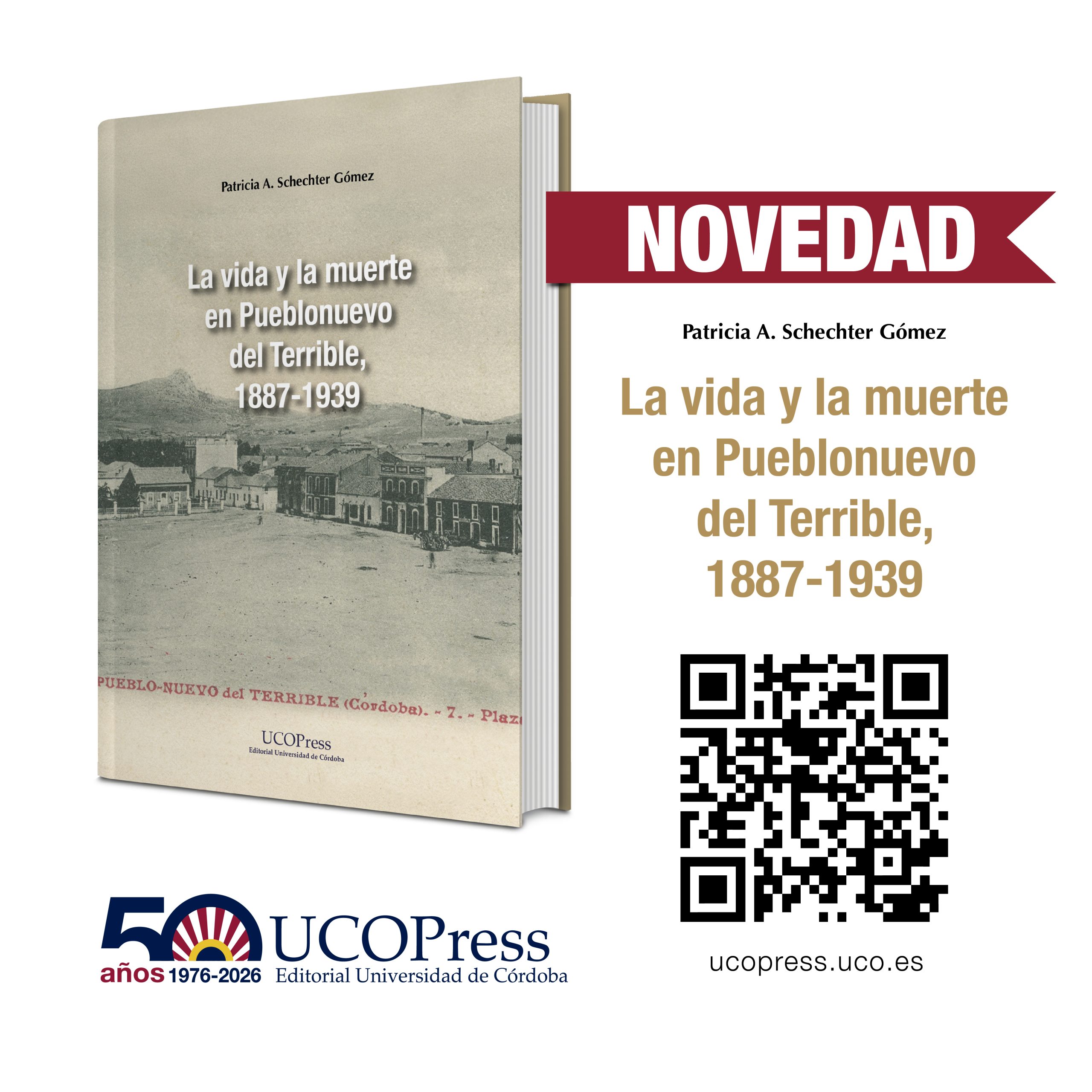
The University of Córdoba’s publishing press, UCOPress, has published La vida y la muerte en Pueblonuevo del Terrible, 1887–1939, a study of the history of this mining town in the north of the province, from its origins in the 1880s to its capture by Franco’s troops during the Civil War.
The author, Patricia Schechter Gómez, is a historian at Portland State University (Oregon, United States) and has maternal roots in Córdoba. Her connection to the subject is also a family one: her great-grandfather held a position on the Pueblonuevo town council for a brief period in the 1930s. After ten years of research in archives across Spain, Schechter has pieced together the history of a municipality which, during the century in which its mining industry was active, was an independent entity between 1905 and 1926.
Women, the Church, co-operatives and labour disputes. The book pays particular attention to the history of women, the life of the Church, the extensive co-operative network and the workers’ struggles in the town – aspects which constitute the main contribution of this research. The book gives a voice to the residents who risked everything to build their own Andalusian village, as well as to those who opposed that project.
An award-winning work. The English edition, entitled El Terrible: Life and Labour in Pueblonuevo, 1887–1939 (Routledge, 2025), received a grant from the American Philosophical Society and was awarded the Gita Chaudhury Prize. With the publication of the Spanish-language version, Spanish-speaking readers can now access this hitherto little-known story.
Enlace a la edición impresa: https://ucopress.uco.es/producto/isbn-9788410720039/ y al formato digital: https://ucopress.uco.es/producto/isbn-9788410720046/
También lo encontrarán en el catálogo de publicaciones OMP con su DOI: https://doi.org/10.21071/000064