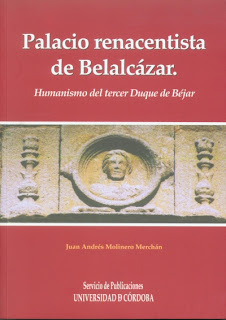
The present study examines one of the most significant monuments in the Los Pedroches region. It is arguably the most expressive monumental emblem of the western part of the region, as the Castle of Belalcázar, with its five hundred years of history, is considered one of the most notable and unique fortresses in all of Spain. The author, Juan Andrés Molinero Merchán, focuses his attention on a highly relevant part of the structure: the 16th-century Renaissance palace. This is approached from both architectural and constructive perspectives—conveying important humanist messages—and from a broad historical viewpoint. This includes the building’s context, the socio-political frameworks of its owners, and specifically the eccentric third Duke of Béjar and fourth Count of Belalcázar. His biographical profile is extensively studied and documented as a determining factor in the philosophical background and modernity embodied in the building.
The work, published by the University of Córdoba Publishing Service in collaboration with the Ricardo Delgado Vizcaíno Foundation, analyzes the architectural and artistic patronage of Don Francisco de Zúñiga Guzmán y Sotomayor in its final chapter, concluding with a documentary appendix, bibliography, and primary sources.