Gender Equality Practices
UCOPress Editorial Universidad de Córdoba is committed to gender equality polices aimed at achieving genuine equality between womyn and men in society. This commitment is implemented through a series of key actions.
Editorial participation
UCOPress shall adopt measures to ensure a balanced representation of womyn and men within its editorial structures, including the Editorial Board, the Editorial and Scientific Committees of its various collections, as well as among peer reviewers.
Use of inclusive language
UCOPress recommends the use of inclusive language that acknowledgesthe presence and situation of womyn in society and is consistent with the principle of gender equality. In this regard, it advised replacing the use of the generic masculine to refer to all individual within a class or group —whether womyn or men— with terms of generic value, the use of explanatory phrases or the omission of the subject where possible, or. when none of these options is possible, the use of split-gender forms.
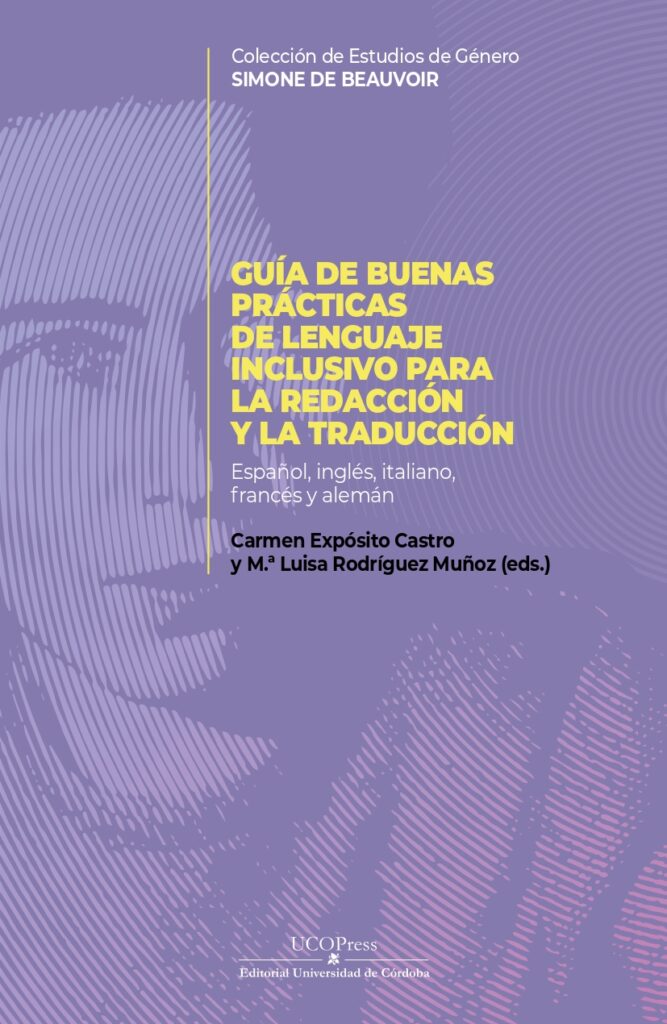
For more detailed alternatives and recommended practices, it is advised to consult the UCOPress Guide to Best Practices in Inclusive Language for Writing and Translation (2023, PDF).
Sex and Gender in Research
Research works should avoid gender stereotypes and biases that treat masculinity as the universal reference, exaggerate biological differences or naturalise socially constructed differences. Authors are also encouraged to consider the gender as a variable in any type of research where relevant. For guidance, see the Practical Guide for Incorporating a Gender Perspective in Research Content (PDF).
Preventing Sexist Bias in Visual Content
In visual content, an overall balanced composition is recommended, avoiding the overrepresentation of male figures in photographs. It is essential to ensure symmetry in roles depicted, as well as in framing, angles, colours, settings, gestures, appearance and actions. Gender stereotypes should be avoided: womyn should not be sexualised, nor should men be represented through stereotypical forms of masculinity. A diversity of emotions and behaviours should be portrayed for all genders.
Diversity in physical and cultural characteristics —including age, ethnicity and body type— should also be reflected, while considering intersectionality in order to avoid reinforcing discrimination. Objectification must be avoided, ensuring that individuals are not depicted as objects for visual consumption and that poses or positions do not sexualise or stereotype any gender, unless contextually justified and applied equally.