Written by the Communications Department
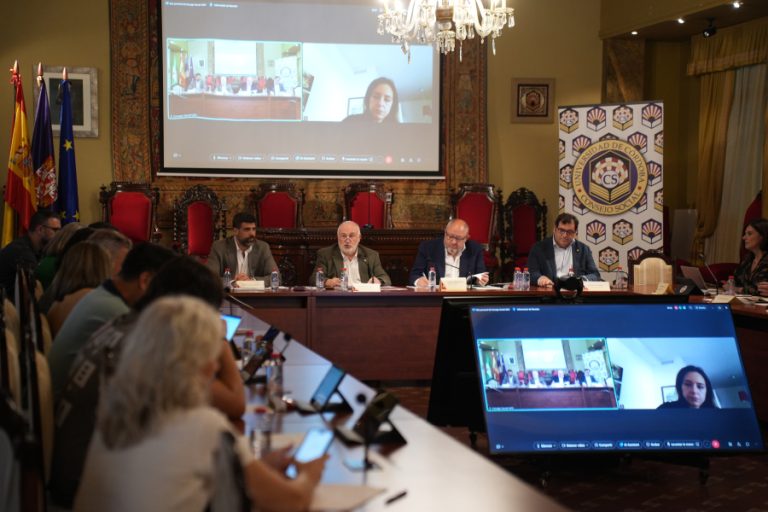
Around eighty professionals from university, academic and scientific publishing houses are gathering from today at the University of Córdoba for the 4th Conference of Professionals in Scientific and Academic Publishing. The event, which is educational in nature, will address the consolidation of open science, the standardisation of open-access publishing processes and the impact of artificial intelligence on publishing.
The conference was opened this morning by the Vice-Chancellor, Manuel Torralbo Rodríguez, who extended an official welcome to the participants. In his address, the Vice-Chancellor emphasised the need to strengthen ethical standards in the world of research and knowledge transfer, “because our social credibility is at stake – something that none of us public servants dedicated to science must ever lose”. Torralbo also highlighted the value of academic and scientific publishers in knowledge transfer, citing UCOPress as an example – which is celebrating its fiftieth anniversary this year and was established just four years after the University of Córdoba was founded. “From the outset, we were aware that the University of Córdoba needed a publishing service to help lecturers disseminate and publish their knowledge, journals, books, etc.,” he said. In this regard, he expressed his gratitude for the impetus provided in recent years by Elisa Borsari, Director-General of Culture and of UCOPress, in professionalising the publishing house. The Vice-Chancellor concluded with a reflection on the “new impetus provided by the challenges of open science and artificial intelligence, which we must transform into editorial intelligence, as the motto of this event states”, he concluded.
The vice-president of UNE (Union of Spanish University Publishers), Remedios Pérez García, has emphasised the need for the meeting to serve as an opportunity to “ask ourselves whether what we do still makes sense in the same way, given that publishing models are changing, with new tools influencing our processes and the way we convey quality, rigour and trust, and for our institutions to understand this”. Pérez García also called on academic and scientific institutions to tackle the precarious situation faced by many of these publishers.
On behalf of Córdoba City Council, which has made the Royal Stables available for the welcome reception, the Councillor responsible for Education, Children, Cooperation and Solidarity, Narci Ruiz Rodríguez, addressed the attendees, reminding them that Córdoba is “a city with historic links to knowledge, history and the exchange of ideas”.
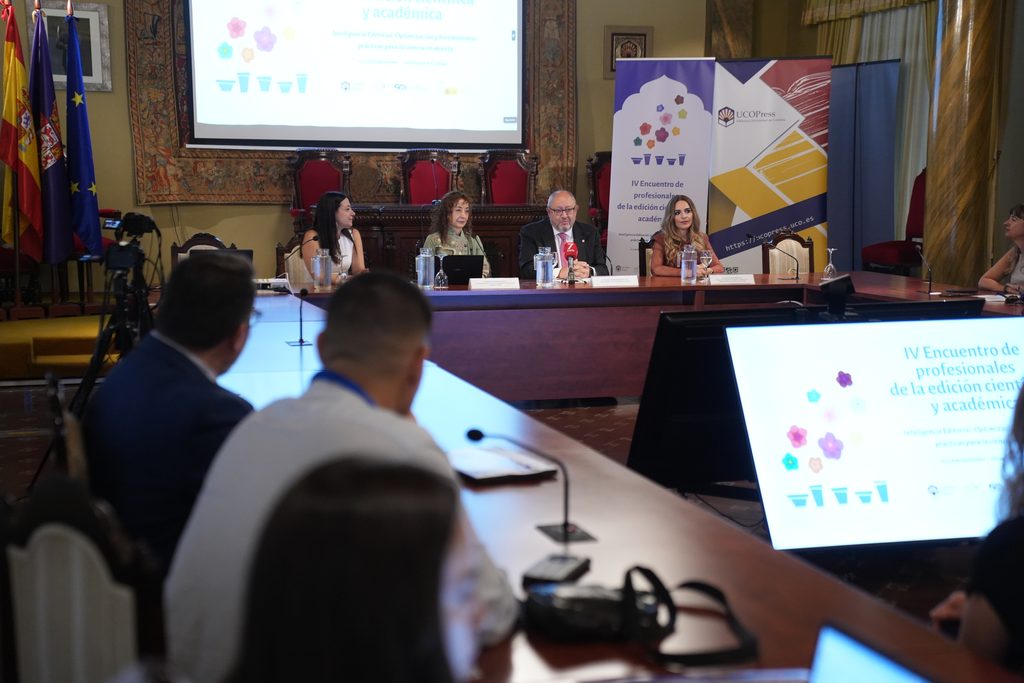
Following the official opening, a round-table discussion was held on the PEPA (Open Access Publishing Platform) project, focusing on the need to move towards standardising processes in open access book publishing. Publishing managers and metadata experts will analyse key aspects such as interoperability, database coverage, indexing and the application of international standards that help to improve the visibility and impact of academic publications. The panellists will include Jaume Llambrich, head of Publicacions URV; Manuel Minchón, publishing specialist at Editorial UHU; Luis Montilla, Technical Community Manager at Crossref; and Reme Pérez, vice-president of UNE and director of Editorial UPV.
Subsequently, Artificial Intelligence was featured on the programme, presented by Daniel Benchimol, director of Proyecto451, who outlined various practical applications already in use within editorial processes, demonstrating how these tools can help to optimise tasks relating to content management, editing and metadata. The session will be moderated by Isaac Caselles, director of Editorial Universidad Francisco de Vitoria and a member of the UNE’s training committee.