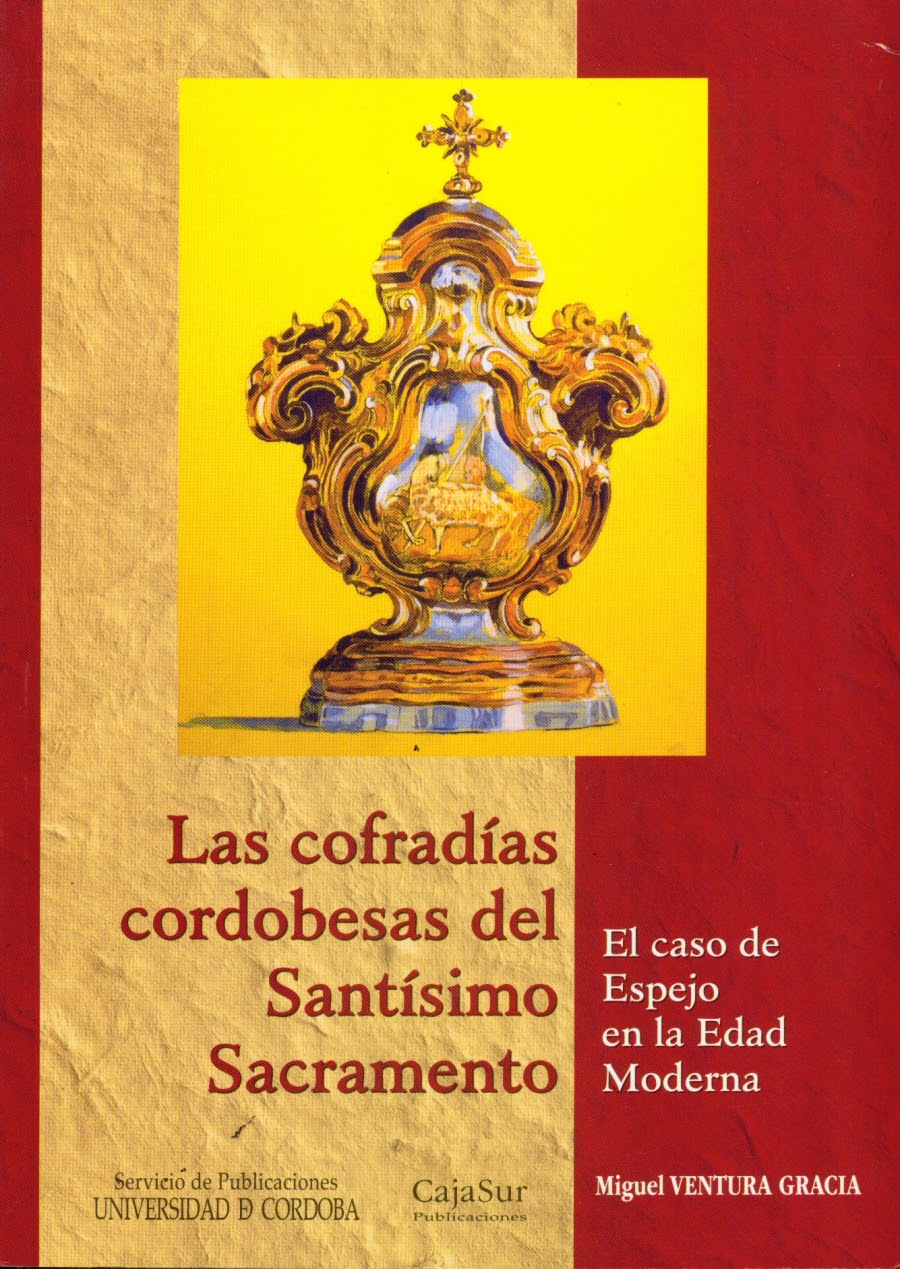
The origins, nature, and purposes of sacramental confraternities are essential aspects for understanding the flourishing of these brotherhoods in the Catholic world, especially after the Council of Trent. An example can be found in the case of the Córdoba town of Espejo: a confraternity of the Blessed Sacrament that emerged in a rural setting and reached heights of true splendor. The feast of Corpus Christi and its octave, in which this sacramental institution played a special role, were utilized by ecclesiastical and civil authorities, who joined forces to achieve their respective objectives: to comply with the dictates of higher authority by collaborating in the dissemination of Eucharistic worship and the power of the Church against its enemies, and the maintenance of the established social order. To this end, they instrumentalized the persuasive power that exuberance in art, celebration, and rejoicing exerted on a peasant population that eagerly awaited the arrival of the great Eucharistic feast for enjoyment, pleasure, and escape.
This is the subject addressed by Miguel Ventura García, author of several books and studies on these topics, in this work published by the Publications Service of the University of Córdoba in collaboration with CajaSur as part of its Maior Collection of Early Modern History Studies, of which this is number 36.