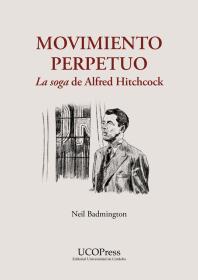
Movimiento perpetuo. "La soga" de Alfred Hitchcock
Palabras clave:
Alfred Hitchcock, La soga, Lenguaje cinematográfico, Teoría QueerSinopsis
Movimiento perpetuo. La soga de Alfred Hitchcock, publicado originalmente en inglés en 2021, es la primera gran monografía sobre la película de 1948, la primera que Hitchcock rodó en color y en la que tuvo que sortear las restricciones de la censura para presentar un drama al mismo tiempo sexual y filosófico. El autor aborda los problemas de producción de una película vanguardista, en la que el lenguaje cinematográfico se depura hasta la austeridad, así como el creciente relieve que ha adquirido con los estudios culturales, especialmente la teoría queer. El título de la monografía alude a la composición musical de la que Hitchcock se sirvió y define perfectamente la naturaleza cinemática.
Referencias
Libros, ensayos, artículos
Alfred Hitchcock’s Rope (1948). New York: Dell.
Allen, Richard (2007), Hitchcock’s Romantic Irony. New York: Columbia UP.
Allen, Richard (2011), “Hitchcock’s Legacy”, en T. Leitch y L. Poague (eds.), A Companion to Alfred Hitchcock. Malden/Oxford: Wiley-Blackwell, pp. 572-591.
Baatz, Simon (2008), For the Thrill of It: Leopold, Loeb, and the Murder that Shocked JazzAge Chicago. New York: Harper Collins.
Bachelard, Gaston (1969), The Poetics of Space, M. Jolas (trad.). Boston: Beacon Press [(2000), La poética del espacio, E. de Champourcin (trad.). México: FCE].
Badmington, Neil (2011), Hitchcock’s Magic. Cardiff: Wales UP.
Barr, Charles (1999), English Hitchcock. Moffat: Cameron and Hollis.
Barr, Charles (2002), Vertigo. London: BFI.
Barr, Charles (2011), “Hitchcock and Early Filmmakers”, en A Companion to Alfred Hitchcock, pp. 49-66.
Barthes, Roland (1989), “The Death of the Author”, en The Rustle of Language, R. Howard (trad.). Berkeley/Los Angeles: California UP, pp. 49-55 [(1994), El susurro del lenguaje, C. Fernández Medrano (trad.). Barcelona: Paidós].
Barthes, Roland (1990), S/Z, R. Miller (trad.), Oxford: Blackwell [(2004), S/Z, N. Rosa (trad.). Buenos Aires: Siglo XXI].
Barthes, Roland (1991), “On S/Z and Empire of Signs”, en The Grain of the Voice: Interviews 1962-1980, L. Coverdale (trad.). Berkeley/Los Angeles: California UP, pp. 68-87.
Barthes, Roland (1994), Roland Barthes by Roland Barthes, R. Howard (trad.). Berkeley/Los Angeles: California UP [(2004), Roland Barthes por Roland Barthes, J. Fombona (trad.). Barcelona: Paidós].
Barthes, Roland (1997), “A Sympathetic Worker”, en The Eiffel Tower and Other Mythologies, R. Howard (trad.). Berkeley/Los Angeles: California UP, pp. 39-41.
Barthes, Roland (2005), The Neutral: Lecture Course at the Collège de France (1977–1978), T. Clerc (ed.), R. E. Krauss y D. Hollier (trads.). New York: Columbia UP.
Barthes, Roland (2009), Mythologies, A. Laversy S. Reynolds (trads.). 2ª ed. London: Vintage [(1980), Mitologías, M. Soler (trad.). Madrid: Siglo XXI].
Barthes, Roland (2011), Sarrasine de Balzac: Séminaires à l’École pratique des hautes études 1967-1968, 1968–1969, C. Coste y A. Stafford (eds.). Paris: Seuil.
Barton, Sabrina (2002), “Hitchcock’s Hands”, en S. Gottlieb y C. Brookhouse (eds.), Framing Hitchcock: Selected Essays fromthe Hitchcock Annual. Detroit: Wayne State UP, pp. 159-178.
Baskins, Cristelle L. (1998), Cassone Painting: Humanism and Gender in Early Modern Italy. Cambridge UP.
Baskins, Cristelle L. (2008), The Triumph of Marriage: Painted Cassoni of the Renaissance. Boston: Isabella Stewart Gardner Museum.
Bauso, Thomas M. (1991), “Rope: Hitchcock’s Unkindest Cut”, en W. Raubicheck y W. Srebnick (eds.), Hitchcock’s Rereleased Films: From Rope to Vertigo. Detroit: Wayne State UP, pp. 226-39.
Benson, Stephen y Connors, Clare (2014), “Introduction”, en S. Benson y C. Connors (eds.), Creative Criticism: An Anthology and Guide. Edinburgh: UP, pp. 1-47.
Bergson, Henri (1911), Laughter: An Essay on the Meaning of the Comic, C. Brereton y F. Rothwell (trads.). London: Macmillan [(2016), La risa, G. Graíño (trad.). Madrid: Alianza].
Bloom, Ken (2012), Broadway: Its History, People and Places: An Encyclopedia. 2ª ed. New York/London: Routledge.
Brandes, Philip (19 de agosto de 2001), “Hitchcock without the Camera”, Los Angeles Times, https://www.latimes.com/archives/la-xpm-2001-aug-19-ca-35756-story.html.
Brill, Lesley (1988), The Hitchcock Romance: Love and Irony in Hitchcock’s Films. Princeton UP.
Carlson, David; Carlton, David y Etienne, Anne (2007), Theatre Censorship: From Walpoleto Wilson. Oxford UP.
Cavarero, Adriana (2016), Inclinations: A Critique of Rectitude, trad. de A. Minervini y A. Sitze. Stanford UP [(2022), Inclinaciones: una crítica de la rectitud, M. I. Moyano (trad.). Barcelona: Fragmenta editorial].
Chion, Michel (1992), “The Impossible Embodiment”, enEverything You Always Wanted to Know about Lacan (But Were Afraid to Ask Hitchcock), S. Žižek (ed.). London/New York: Verso, pp. 195-207.
Chion, Michel (1994), Audio-Vision: Sound on Screen, C. Gorbman (ed.). New York: Columbia UP.
Clark, T. J. (2006), The Sight of Death: An Experiment in Art Writing. New Haven/London: Yale UP.
Clifton, Kevin (2013), “Unravelling Music in Hitchcock’s Rope”, Horror Studies, 4.1, pp. 63-74.
Clifton, Kevin (2017), “The Anatomy of Aural Suspense in Rope and Vertigo”, en S. Rawle y K. J. Donnelly (eds.), Partners in Suspense: Critical Essays on Bernard Herrmann and Alfred Hitchcock. Manchester UP, pp. 37-49.
Cohen, Paula Marantz (1995), Alfred Hitchcock: The Legacy of Victorianism. Lexington: Kentucky UP.
Cohen, Tom (2005), Hitchcock’s Cryptonymies. Volume I: Secret Agents. Mineapolis/London: Minnesota UP.
Collier, Constance (1929), Harlequinade: The Story of My Life. London: John Lane, the Bodley Head.
Connelly, Thomas J. (2014), “Big Window, Big Other: Enjoyment and Spectatorship in Alfred Hitchcock’s Rope”, Quarterly Review of Film and Video, 31, pp. 779-788.
Conrad, Peter (2000), The Hitchcock Murders. London: Faber and Faber.
Cowper, William (1818), “Retirement”, en Poems. Edinburgh: William Blair, 2 vols., vol. 1, pp. 186-215.
Cronyn, Hume (1991), A Terrible Liar: A Memoir. New York: William Morrow.
Damasio, Antonio R. (2006), “How Hitchcock’s Rope Stretches Time”, Scientific American, 16.1, pp. 38-39.
Deleuze, Gilles (2005), Cinema 1: The Movement-Image, H. Tomlinson y B. Habberjam (trads.). London/New York: Continuum.
DeLillo, Don (1985), White Noise. London: Picador [(2011), Ruido de fondo, trad. de G. Castelli. Madrid: Austral].
Dellolio, Peter J. (2008), “Filmic Space and Real Time in Rope”, Midwest Quarterly, 50.1, pp. 87-101.
Derrida, Jacques, Glas (1986), J. P. Leavey Jr. y R. Rand (trads.). Lincoln/Londres: Nebraska UP [(2015), Clamor, C. Peretti et al. (trads.). Madrid: La Oficina de Arte y Ediciones].
Derrida, Jacques (1992), “Mallarmé”, en D. Attridge (ed.), Acts of Literature. New York/London: Routledge, pp. 110-126 [(1989), “Mallarmé”, en Cómo no hablar y otros textos. Barcelona: Ánthropos].
Derrida, Jacques (1997), Of Grammatology, G. Chakravorty Spivak (trad.). Baltimore/London: Johns Hopkins UP [(1971), De la gramatología, O. del Barco y C. Ceretti (trads.). Madrid: Siglo XXI].
“Dick Hogan; Big Band Singer, Movie Actor” (26 de agosto de 1995), Los Angeles Times, en línea: <http://articles.latimes.com/1995-08-26/news/mn-39162_1_dick-hogan>.
Diehl, Heath A. (2013), “Reading Hitchcock/Reading Queer: Adaptation, Narrativity, and a Queer Mode of Address in Rope, Strangers on a Train, and Psycho”, Clues: A Journal of Detection, 31.1, pp. 33-43.
Dolar, Mladen (1992), “Hitchcock’s Objects”, en Everything You Always Wanted to Know About Lacan (But Were Afraid to Ask Hitchcock), pp. 31-46.
Doty, Alexander (2011), “Queer Hitchcock”, en A Companion to Alfred Hitchcock, pp. 473-489.
Durgnat, Raymond (1974), The Strange Case of Alfred Hitchcock or the Plain Man’s Hitchcock. London: Faber and Faber.
Durgnat, Raymond (2002), A Long Hard Look at Psycho. London: BFI.
Dyer, Geoff (2013), Zona. Edinburgh: Canongate.
Edelman, Lee (2004), No Future: Queer Theory and the Death Drive. Durham: Duke UP.
Finler, Joel W. (1992), Alfred Hitchcock: The Hollywood Years. London: B. T. Batsford.
French, Sean (1993), Patrick Hamilton: A Life. London: Faber and Faber.
Freud, Sigmund (2002), The Psychopathology of Everyday Life, A. Bell (trad.). London: Penguin [(2011), Psicopatología de la vida cotidiana, L. López-Ballesteros de Torres (trad.). Madrid: Alianza].
Gissing, George (1968), New Grub Street. Harmondsworth: Penguin [(2012), La nueva Grub Street, M. Temprano García (trad.). Barcelona: Alba].
Gottlieb, Sidney (2004), “Unknown Hitchcock: The Unrealized Projects”, en R. Allen y S. Ishii-Gonzáles (eds.), Hitchcock: Past and Future. London/New York: Routledge, pp. 85-106.
Greven, David (2017), Intimate Violence: Hitchcock, Sex, and Queer Theory. New York: Oxford UP.
Hamilton, Patrick (1929), Rope: A Play. London: Constable and Co. Ltd.
Hamilton, Patrick (2001), Hangover Square: A Story of Darkest Earl’s Court. London: Penguin.
Hardwicke, sir Cedric (1961), A Victorian in Orbit: The Irreverent Memoirs of Sir Cedric Hardwicke as Told to James Brough. London: Methuen.
Harwood, Nigel (2005), “We Do Not Seem to Have a Theory… The Theory I Present Here Attempts to Fill This Gap: Inclusive and Exclusive Pronouns inAcademic Writing”, Applied Linguistics, 26.3, pp. 343-375.
Hell, Henri (1959), Francis Poulenc, E. Lockspeiser (trad.). London: John Calder.
Hemmeter, Thomas (1991), “Twisted Writing: Rope as an Experimental Film”, en Hitchcock’s Rereleased Films, pp. 253-265.
Hemmeter, Thomas (2011), “Hitchcock’s Narrative Modernism: Ironies of Fictional Time”, en A Companion to Alfred Hitchcock, pp. 67-85.
Higdon, Hal (1999), Leopold and Loeb: The Crime of the Century. Urbana/Chicago: Illinois UP.
Hitchcock, Alfred (1997), “My Most Exciting Picture”, en S. Gottlieb (ed.), Hitchcock on Hitchcock: Selected Writings and Interviews. London: Faber and Faber, pp. 275-84.
Hollinghurst, Alan (2006), The Swimming-Pool Library. London: Vintage.
Holt, James (2007), “The Hitchcock Cameo: Aesthetic Considerations”, en D. Baggett y W. A. Drumin (eds.), Hitchcock and Philosophy: Dial M for Metaphysics, Chicago/La Salle: Open Court, pp. 229-238.
Isherwood, Christopher (1977), Christopher and His Kind: 1929-1939. New York: Avon Books.
Ishii-Gonzáles, Sam (2004), “Hitchcock with Deleuze”, en Hitchcock: Past and Future, pp. 128-145.
Jacobs, Steven (2007), The Wrong House: The Architecture of Alfred Hitchcock, Rotterdam: 010 Publishers.
Johnston, John (1990), The Lord Chamberlain’s Blue Pencil. London: Hodder and Stoughton.
Kabatchnik, Amnon (2020), Blood on the Stage, 1925-1950: Milestone Plays of Crime, Mystery, and Detection: An Annotated Repertoire. Lanham: Scarecrow Press.
Kerzoncuf, Alain y Barr, Charles (2015), Hitchcock Lost and Found. Lexington: Kentucky UP.
Krohn, Bill (2000), Hitchcock at Work. London: Phaidon.
Laurents, Arthur (2000), Original Story By: A Memoir of Broadway and Hollywood, New York/London: Applause.
Lawrence, Amy (1999), “American Shame: Rope, James Stewart, and the Postwar Crisisin American Masculinity”, en J. Freedmany R. Millington (eds.), Hitchcock’s America. New York/Oxford: Oxford UP, pp. 55-76.
Leff, Leonard J. (1988), Hitchcock and Selznick: The Rich and Strange Collaboration ofAlfred Hitchcock and David O. Selznick in Hollywood. London: Weidenfeld and Nicolson.
Leitch, Thomas (1991), Find the Director and Other Hitchcock Games. Athens/London: Georgia UP.
Leitch, Thomas (2002), The Encyclopedia of Alfred Hitchcock. New York: Checkmark Books.
Lyotard, Jean-François (1992), “Answer to the Question: What Is the Postmodern?”, en The Postmodern Explained to Children: Correspondence 1982-1985, D. Barry et al. (trads.). London: Turnaround, pp. 9-25 [(1994), La posmodernidad (explicada a los niños), E. Lynch (trad.). Barcelona: Gedisa].
MacCabe, Colin (1985), “Realism and the Cinema: Notes on Some Brechtian Theses”, en Theoretical Essays: Film, Linguistics, Literature. Manchester UP, pp. 33-57.
Macdonald, Ian W. (2013), Screenwriting Poetics and the Screen Idea. Basingstoke: Palgrave Macmillan.
Mann, Thomas (1955), “Death in Venice”, en Death in Venice, Tristan, Tonio Kröger, H. T. Lowe-Porter (trad.). Harmondsworth: Penguin, pp. 7-83 [(2020), La muerte en Venecia, J. J. del Solar (trad.). Barcelona: Punto de Lectura].
Mansfield, Katherine (1962), “A Dill Pickle”, Bliss and Other Stories. Harmondsworth: Penguin, pp. 181-188 [(2008), “Un pepinillo al eneldo”, en Cuentos completos, C. Janés (trad.). Barcelona: Debolsillo].
Matthews, Kristin L. (2010), “Reading, Guidance, and Cold War Consensus in Alfred Hitchcock’s Rope”, The Journal of Popular Culture, 43.4, pp. 738-760.
McGilligan, Patrick (2003), Alfred Hitchcock: A Life in Darkness and Light. New York: HarperCollins.
McKernan, Maureen (1924), The Amazing Crime and Trial of Leopold and Loeb. Chicago: Plymouth Court Press.
McKittrick, Casey (2016), Hitchcock’s Appetites: The Corpulent Plots of Desire and Dread. New York/London: Bloomsbury.
Mellers, Wilfrid (1993), Francis Poulenc. Oxford/New York: Oxford UP.
Miller, D. A. (1990), “Anal Rope”, Representations, 32, pp. 114-133.
Miller, D. A. (2016), Hidden Hitchcock. Chicago/London: Chicago UP.
Mills, C. Wright (2000), The Power Elite. 2ª ed. New York: Oxford UP.
Moorhead, Carolyn (1984), Sidney Bernstein: A Biography. London: Jonathan Cape.
Nabokov, Vladimir (1963), Pale Fire. New York: LancerBooks [(2009), Pálido fuego, A. Bernárdez (trad.). Barcelona: Anagrama].
Nelson, Maggie (2011), “All That Is the Case: Some Thoughts on Fact in Nonfiction and Documentary Poetry”, en K. Haworth y D. W. Moore (eds.), Lit from Within: Contemporary Masters on theArt and Craft of Writing. Athens: Ohio UP, pp. 155-163.
Olsson, Jan (2015), Hitchcock à la Carte. Durham: Duke UP.
O’Meara, Lucy (2012), Roland Barthes at the Collège de France. Liverpool UP.
Orr, John (2005), Hitchcock and Twentieth-Century Cinema. London/New York: Wallflower Press.
Paglia, Camille (1998), The Birds. London: BFI.
Pascal, Blaise (1995), Pensées, trad. de A. J. Krailsheimer (trad.). 2ª ed. Harmondsworth: Penguin [(2028), Pensamientos, G. Albiac (ed.). Madrid: Tecnos].
Paulin, Scott D. (2017), “Unheard Sexualities: Queer Theory and the Soundtrack”, en R. Samer y W. Whittington (eds.), Spectatorship: Shifting Theories of Gender, Sexuality, and Media. Austin: Texas UP, pp. 77-95.
Perkins, V. F. (1963), “Rope”, Movie, 7, pp. 11-13.
Phillips, Michael (28 de agosto de 2001), “With Staging Rope Comes Full Circle”, Los Angeles Times, en línea: <https://www.latimes.com/archives/la-xpm-2001-aug-28-ca-39132-story.html>.
Pomerance, Murray (2011), “Some Hitchcockian Shots”, en A Companion to Alfred Hitchcock, pp. 237-252.
Pomerance, Murray (2014), Marnie. London: BFI.
Pomerance, Murray (2016), The Man Who Knew Too Much. London: BFI.
Pomerance, Murray (2019), A Dream of Hitchcock, Albany: SUNY Press.
Poulenc, Francis (1978), My Friends and Myself, S. Audel (ed.), J. Harding (trad.). London: Dobson.
Poulenc, Francis (1991), “Echo and Source”: Selected Correspondence 1915-1963, S. Buckland (ed.). London: Victor Gollancz.
Quirk, Randolph; Greenbaum, Sidney; Leech, Geoffrey y Svartvik, Jan (1985), A Comprehensive Grammar of the English Language. London/New York: Longman.
Raubicheck, Walter y Srebnick, Walter (1991), “Introduction: Hitchcock’s Rereleased Films and Cinema Studies”, en Hitchcock’s Rereleased Films, pp. 17-30.
Restivo, Angelo (2011), “Hitchcock and the Postmodern”, en A Companion to Alfred Hitchcock, pp. 555-571.
Rich, Adrienne (1980), “Compulsory Heterosexuality and Lesbian Existence”, Signs, 5.4, pp. 631-60.
Rogers, Samuel (1852), “Ginevra”, en Italy: A Poem. London: Edward Moxton, pp. 110-14.
Rohmer, Eric y Chabrol, Claude (1979), Hitchcock: The First Forty-Four Films, S. Hochman (trad.). New York: Ungar [(2010), Hitchcock, I. M. Agoff (trad.). Buenos Aires: Manantial].
Rope (26 de agosto de 1948), en Variety, p. 3.
Ross, Steven J. (1998), Working-class Hollywood: Silent Film and the Shaping of Class in America. Princeton UP.
Roth, Philip (2005), The Ghost Writer. London: Vintage [(2013), Zuckerman encadenado, La visita al maestro, Zuckerman desencadenado, La lección de anatomía, La orgía de Praga, J. Fibla (trad.). Barcelona: Galaxia Gutenberg].
Rothman, William (1982), Hitchcock—The Murderous Gaze. Cambridge, Mass./London: Harvard UP.
Rothman, William (2014), Must We Kill the Thing We Love? Emersonian Perfectionism and the Films of Alfred Hitchcock. New York: Columbia UP.
Ryall, Tom (1996), Alfred Hitchcock and the British Cinema. London: Athlone.
Ryall, Tom (2003), Blackmail. London: BFI.
San Juan, Eric y McDevitt, Jim (2013), Hitchcock’s Villains: Murderers, Maniacs, andMother Issues. New York: Scarecrow Press.
Schantz, Ned (2014), “Hospitality and the Unsettled Viewer: Hitchcock’s Shadow Scenes”, en Alfred Hitchcock, N. Badmington (ed.). London/New York: Routledge, 4 vols., vol. 4, pp. 215-232.
Schatz, Thomas (1998), The Genius of the System: Hollywood Filmmaking in the Studio Era. London: Faber and Faber.
Schildcrout, Jordan (2011), “Queer Justice: The Retrials of Leopold and Loeb”, The Journal of American Culture, 34.2, pp. 167-177.
Schmidt, Carl B. (2001), Entrancing Muse: A Documented Biography of Francis Poulenc. Hillsdale: Pendragon Press.
Schroeder, David (2012), Hitchcock’s Ear: Music and the Director’s Art. New York/London: Continuum.
Sharff, Steffan (1997), The Art of Looking in Hitchcock’s Rear Window. New York: Limelight.
Shellard, Dominic; Nicholson, Steve y Handley, Miriam (2004), The Lord Chamberlain Regrets: A History of British Theatre Censorship. London: British Library.
Smith, Susan (2000), Hitchcock: Suspense, Humour and Tone. London: BFI.
Sontag, Susan (2003), Regarding the Pain of Others. London: Penguin [(2004), Ante el dolor de los demás, A. Major (trad.). Madrid: Suma de Letras].
Spoto, Donald (1994), The Dark Side of Genius: The Life of Alfred Hitchcock. London: Plexus [(2022), Alfred Hitchcock: la cara oculta del genio. 2ª ed. Barcelona: T & B].
Sterritt, David (2011a), “From Transatlantic to Warner Bros”, en A Companion to Alfred Hitchcock, pp. 309-328.
Sterritt, David (2011b), “Morbid Psychologies and So Forth: The Fine Art of Rope”, en R. Barton Palmer y D. Boyd (eds.), Hitchcock at the Source: The Auteur as Adaptor. Albany: SUNY Press, pp. 159-172.
Strauss, Marc Raymond (2016), Hitchcock’s Objects and Subjects: The Significance of Things on Screen. Jefferson: McFarland.
Sullivan, Jack (2006), Hitchcock’s Music, New Haven y Londres: Yale UP.
Taylor, John Russell (1981), Hitch: The Life and Work of Alfred Hitchcock. London: Abacus.
Thoreau, Henry David (1971), Walden, Princeton UP [(2024), Walden, J. Alcoriza y A. Lastra (eds.). Madrid: Cátedra].
Thornton, Peter (1984), “Cassoni, Forzieri, Goffani and Cassette: Terminology and its Problems”, Apollo, 120.272, pp. 246-251.
Truffaut, François (1978), Hitchcock. 2ª ed. London: Paladin [(2010), El cine según Hitchcock, R. Gómez Redondo (trad.). Madrid: Alianza].
Vest, James M. (2003), Hitchcock and France: The Forging of an Auteur. Westport/London: Praeger.
Wallace, Lee (2000), “Continuous Sex: The Editing of Homosexuality in Bound and Rope”, Screen, 41.4, pp. 369-387.
Waugh, Patricia (1984), Metafiction: The Theory and Practice of Self-conscious Fiction. London: Methuen.
Wharton, Edith (1974), The Age of Innocence. Harmondsworth: Penguin [(2020), La edad de la inocencia, M. Schifino (trad.), Madrid: Cátedra).
Wolff, Tobias (2004), Old School. London: Bloomsbury [(2005), Vieja escuela, M. Antolín Rato (trad.). Madrid: Alfaguara].
Wood, Michael (2015), Alfred Hitchcock: The Man Who Knew Too Much. New York: Amazon.
Wood, Robin (2002), Hitchcock’s Films Revisited. 2ª ed. New York: Columbia UP.
Wood, Robin (2004-05), “Hitchcock and Fascism”, Hitchcock Annual, 13, pp. 25-63.
Woolf, Virginia (1992), Mrs. Dalloway. London: Penguin [(2018), La señora Dalloway, J. L. López Muñoz (trad.). Madrid: Alianza].
Yacowar, Maurice (2010), Hitchcock’s British Films. 2ª ed. Detroit: Wayne State UP.
Žižek, Slavoj (1991), Looking Awry: An Introduction to Jacques Lacan through Popular Culture. Cambridge, Mass./London: MIT Press.
Material de archivo
A Photographic Production Notebook on Alfred Hitchcock’s Rope, Warner Bros., Los Ángeles, 1948 (carpeta 630 de la Colección Alfred Hitchcock en la Biblioteca Margaret Herrick).
Carta de Fred Ahern a Joseph Breen, 1 de diciembre de 1947 (carpeta de La soga y la ACP en la Biblioteca Margaret Herrick).
Carta de Fred Ahern a Stephen S. Jackson, 17 de diciembre de 1947 (carpeta de La soga y la ACP en la Biblioteca Margaret Herrick).
Carta de Fred Ahern a Stephen S. Jackson, 19 de enero de 1948 (carpeta de La soga y la ACP en la Biblioteca Margaret Herrick).
Carta de Fred Ahern a Stephen S. Jackson, 24 de enero de 1948 (carpeta de La soga y la ACP en la Biblioteca Margaret Herrick).
Carta de Harold Berkowitz de Warner Bros a P. R. M. Inc. (New York), 13 de junio de 1956.
Memorándum de Sidney Bernstein al señor Chapman, 18 de julio de 1957, carpeta 630 de la Colección Alfred Hitchcock en la Biblioteca Margaret Herrick.
Memorándum de Mort Blumenstock a Roy Obringer de 10 de mayo de 1948, carpeta 2812 del Archivo Warner Bros.
Carta de Joseph Breen a Alfred Hitchcock, 9 de septiembre de 1946 (carpeta de La soga y la ACP en la Biblioteca Margaret Herrick).
Carta de E. Fulton Brylawski a Samuel Taylor, de Taylor, Winokur y Schoenberg de San Francisco, 8 de diciembre de 1972 (carpeta 630 de la Colección Alfred Hitchcock en la Biblioteca Margaret Herrick).
Carta de Gordon L. Files a F. E. Witt de Warner Bros. 16 de diciembre de 1954 (carpeta 12934B del Archivo Warner Bros.)
Carta de Alfred Hitchcock a Joseph Breen, 4 de septiembre de 1946 (Documento de la ACP sobre La soga en la Biblioteca Margaret Herrick).
Cartas de Stephen S. Jackson a Fred Ahern, 15 de diciembre de 1947, 22 de diciembre de 1947, 23 de enero de 1948 (carpeta de La soga y la ACP de la Biblioteca Margaret Herrick).
Carta de Jacqueline H. Johnstone a Herman Citron, 20 de diciembre de 1962 (carpeta 630 de la Colección Alfred Hitchcock en la Biblioteca Margaret Herrick).
Carta de George Sharf a Herman Citron, 31 de mayo de 1963 (carpeta 630 de la Colección Alfred Hitchcock en la Biblioteca Margaret Herrick).
Carta de Transatlantic Pictures a A. E. Carlson, 17 de julio de 1948 (carpeta 2701B del Archivo Warner Bros.).
Carta de Robert Winokur a George Sharf, 4 de febrero de 1963 (carpeta 630 de la Colección Alfred Hitchcock en la Biblioteca Margaret Herrick).
“Budget of Rope”, documento fechado el 9 de enero de 1948 (carpeta 12723B del Archivo Warner Bros.).
Caja 5687, Warner Bros. Archive. (Esbozos del departamento de arte.)
Contrato de trabajo de Perry Ferguson con Transatlantic, 2 de diciembre de 1947 (carpeta 2812 del Archivo Warner Bros.).
Contrato de trabajo de Patrick Hamilton con Transatlantic Pictures, 20 de marzo de 1947 (carpeta 2812 del Archivo Warner Bros.).
Contrato de empleo de Alfred Hitchcock con Transatlantic Pictures para dirigir La soga, 1947 (carpeta 2812 del Archivo Warner Bros.).
Contrato de empleo de James Stewart con Transatlantic Pictures, 29 de diciembre de 1947 (carpeta 2812 del Archivo Warner Bros.).
Contrato de empleo de John Dall con Warner Bros., 26 de junio de 1943, 1943 (carpeta 2827A del Archivo Warner Bros.).
Contrato de empleo de Alfred Hitchcock con Warner Bros., 13 de octubre de 1948 (carpeta 2847 del Archivo Warner Bros).
Contrato de empleo de Joan Chandler con Warner Bros., 5 de abril de 1945 (carpeta 2738A del Archivo Warner Bros.).
Documento publicitario sin título de Bill Rice y Ken Whitmore (carpeta 706 del Archivo Warner Bros.)
Documento publicitario para La soga sin fecha ni firma (carpeta 706 del Archivo Warner Bros.).
Guion para el reestreno de La soga escrito por Arthur Houseman, 4 de junio de 1962 (carpeta 630 de la Colección Alfred Hitchcock en la Biblioteca Margaret Herrick).
Hoja sin fecha sobre personal y reparto de La soga (carpeta 2812 del Archivo Warner Bros.).
Informe #2144 de gastos de localización, 24 de febrero de 1948 (carpeta 1434 del Archivo Warner Bros.).
Informe #2150 de gastos de localización, 8 de marzo de 1948 (carpeta 1434 del Archivo Warner Bros.).
Informes de producción diaria y progreso de La soga (carpeta 1490 del Archivo Warner Bros.).
Arthur Laurents, Rope, guion fechado el 22 de noviembre de 1947 (carpeta 2198A del Archivo Warner Bros.)
Arthur Laurents, Rope, guion fechado el 16 de diciembre de 1947 (con páginas adicionales fechadas el 13 de enero de 1948) (carpeta 2198A del Archivo Warner Bros.)
Memorándum interdepartamental de Leo F. Forbstein a C. H. Wilder, 24 de enero de 1948 (carpeta 1057B del Archivo Warner Bros.).
Memorándum de Carl Milliken a Fred Ahern, 5 de enero de 1948 (carpeta 2912 del Archivo Warner Bros.).
Memorándum de Roy Obringer a T. J. Martin, 10 de mayo de 1948 (carpeta 2812 del Archivo Warner Bros.).
Memorándum de Victor Peers a Carl Milliken, 12 de enero de 1948 (carpeta 2812 del Archivo Warner Bros.)
Memorándum de Helen Schoen Joseph McLaughlin, 10 de marzo de 1948 (carpeta 1057B del Archivo Warner Bros.).
Memorándum de Sol E. Zwicker a H. Bareford, 10 de noviembre de 1948 (carpeta 12670A del Archivo Warner Bros.).
“Motion Pictures Made by Mr. Alfred Hitchcock from 1939 to 1957” (carpeta 1425 de la Colección Alfred Hitchcock en la Biblioteca Margaret Herrick).
Telegramas Albert S. Howson a Joseph Hummel y a Hitchcock, 13 de julio de 1948 (carpeta 2812 del Archivo Warner Bros.)
Warner Bros. Plans for Your Presentation of Rope, Los Angeles, 1948 (Biblioteca Margaret Herrick).
He consultado material misceláneo adicional en las siguientes carpetas del Archivo Warner Bros. y la Colección Alfred Hitchcock en la Biblioteca Margaret Herrick que contextualizo en las notas a pie de página): 629, 630, 1050, 1051 y 1124 (Biblioteca Margaret Herrick); 597, 597A,698, 949, 1490, 2198, 2701B, 2738A, 3229B, 12670, 12670A, 12723B, 14503A2 y 14503A4 (Archivo Warner Bros.).
Publicado
Colección
Licencia

Esta obra está bajo una licencia internacional Creative Commons Atribución-NoComercial-CompartirIgual 4.0.