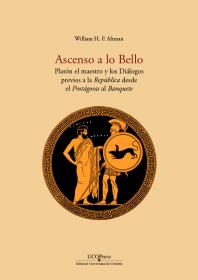
Ascenso a lo Bello. Platón el maestro y los Diálogos previos a la República desde el Protágoras al Banquete
Palabras clave:
República, Altman, FilosofíaSinopsis
“Lo más importante que necesita un estudiante de Platón es un buen sentido del humor”. Con esta afirmación, William H. F. Altman da comienzo a Ascenso a lo Bello. Platón el maestro y los Diálogos previos a la República desde el Protágoras al Banquete. Aunque escrito en último lugar en el contexto de su pentalogía dedicada a Platón el maestro y la reconstrucción del Orden de Lectura de los Diálogos de Platón, inaugura el currículo pedagógico de la elusiva Academia platónica, reorganizando los diálogos en función de su valor educativo, partiendo de dos verdades incuestionables sobre Platón: “que el fundador de la Academia fue un maestro” y “que los diálogos de Platón son eminentemente enseñables” y, así pues, que Platón el maestro impartía sus diálogos en sus clases. Basándose en ambas, Platón nos legó el “currículo eterno de la Academia”, que nos ayuda a imaginarla con mayor clarividencia.
Comenzando por el teatral Protágoras y alcanzando la cima de la montaña en el Banquete, los diálogos intermedios –Alcibíades Mayor, Alcibíades Menor, Rivales, Hipias Mayor, Hipias Menor, Ion y Menéxeno– introducen al estudiante en la filosofía, como intermedio entre la ignorancia y la sabiduría, y el platonismo. Creando una “fricción dialéctica” útil, Altman hace un repaso a la bibliografía más relevante sobre los estudios platónicos –empezando por Friedrich D. E. Schleiermacher, que originó el prejuicio predominante sobre las obras dedicadas a los principiantes– con humor, erudición y una claridad poco común que nos invita a leer a Platón no como un autor clásico, sino como un maestro vivo.
Referencias
W. H. Adkins, Merit and Responsibility: A Study in Greek Values, Clarendon Press, Oxford, 1960.
Knut Ågotnes, ‘Philotimia. On Rhetoric, Virtues, and Honor in the Symposium’, en Philosophy as Drama: Plato’s Thinking through Dialogue, ed. de H. Fossheim, V. Songe-Møller y K. Ågotnes, Bloomsbury, Londres, 2019, pp. 123-139.
Javier Aguirre, ‘Goethe, Schleiermacher y la valoración del Ion’, Éndoxa 29 (2012), pp. 73-92.
Alcibiade, Alcibiade secondo, Ipparco, Rivali, ed. y trad. de A. Carlini, Boringhieri, Turín, 1964.
Alcibiade. Platon; traduction inédite par Chantal Marbœuf et Jean-François Pradeau; introduction, notes, bibliographie et index, ed. de J.-F. Pradeau, Flammarion, París, 1999.
Alcibiades and the Socratic Lover-Educator, ed. de M. Johnson y H. Tarrant, Bloomsbury, Londres, 2012.
Danielle S. Allen, ‘Changing the Authoritative Voice: Lycurgus’ Against Leocrates’, Classical Antiquity 19/1 (abril de 2000), pp. 5-33.
——– , Why Plato Wrote, Blackwell, West Sussex, 2010.
R. E. Allen, ‘The Socratic Paradox’, Journal of the History of Ideas 21/2 (abril-junio de 1960), pp. 256-265.
——– , Plato’s Euthyphro and the Earlier Theory of Forms, Routledge, Londres, 1970.
——– , ‘Plato’s Earlier Theory of Forms’, en The Philosophy of Socrates: A Collection of Critical Essays, ed. de Gregory Vlastos, Palgrave Macmillan, Garden City, NY, 1971, pp. 319-334.
——– , ‘Comment (on Ion)’, in Plato, Ion, Hippias Minor, Laches, Protagoras, translated with comment by R. E. Allen, Yale University Press, New Haven, CT, 1996, pp. 3-7.
Nili Alon Amit, ‘Xenophon’s Virtue Personified’, Kentron 32 (2016), pp. 137-150.
Philip Altman, ‘The New Age of Teaching’. Disponible en: https://www.youtube.com/ watch?v=Tprly-WC-Qw.
William H. F. Altman, ‘Tullia’s Secret Shrine: Birth and Death in Cicero’s de Finibus’, Ancient Philosophy 28 (2008), pp. 373-393.
——– , ‘Altruism and the Art of Writing; Plato, Cicero, and Leo Strauss’, Humanitas 22 (2009), pp. 69-98.
——– , ‘Review of Catherine Zuckert, Plato’s Philosophers’, Polis 27/1 (verano de 2010), pp. 147-150.
——– , ‘A Tale of Two Drinking Parties: Plato’s Laws in Context’, Polis 27 (2010), pp. 240-264.
——– , ‘Review of Laurence Lampert, How Philosophy Became Socratic’, Polis 28/1 (verano de 2011), pp. 166-170.
——– , ‘Reading Order and Authenticity: The Place of Theages and Cleitophon in Platonic Pedagogy’, Plato: The electronic Journal of the International Plato Society 11 (2011), pp. 1-50.
——– , ‘Laches Before Charmides: Fictive Chronology and Platonic Pedagogy’, Plato 10 (noviembre de 2010), pp. 1-28.
——– , ‘The Reading Order of Plato’s Dialogues’, Phoenix 64 (2010), pp. 18-51. [‘El Orden de Lectura de los Diálogos de Platón’, trad. de J. Mª Jiménez Caballero, La torre del Virrey 25 (2019/1), pp. 93-128. Recuperado a partir de https://revista.latorredelvirrey.es/LTV/article/view/269].
——– , ‘A Tale of Two Drinking Parties: Plato’s Laws in Context’, Polis 27 (2010), pp. 240-264.
——– , The German Stranger: Leo Strauss and National Socialism, Lexington, Lanham, MD, 2011.
——– , ‘Ancient Civics for Modern Times’ (25 de febrero de 2011). Disponible en: https://www.academia.edu/6803734/Ancient_Civics_for_Modern_Times.
——– , ‘Coming Home to the Iliad’ (25 de marzo de 2011). Disponible en: https://www.academia. edu/6804950/Coming_Home_to_the_Iliad.
——– , ‘In Search of a Post-Strauss Xenophon’ (17 de noviembre de 2011). Disponible en: https://www. academia.edu/5145764/In_Search_of_a_Post-Strauss_Xenophon.
——– , Plato the Teacher: The Crisis of the Republic, Lexington, Lanham, MD, 2012. [Platón el maestro. La crisis de la República, trad. M. Golfe Folgado, UCOPress, Córdoba, 2023].
——– , ‘Why Plato Wrote Epinomis; Leonardo Tarán and the Thirteenth Book of the Laws’, Polis 29 (2012), pp. 83-107.
——– , ‘Parmenides’ Fragment B3 Revisited’, Hypnos 35/2 (2015), pp. 197-230.
——– , The Guardians in Action: Plato the Teacher and the Post-Republic Dialogues from Timaeus to Theaetetus, Lexington, Lanham, MD, 2016.
——– , The Guardians on Trial: The Reading Order of Plato’s Dialogues from Euthyphro to Phaedo, Lexington, Lanham, MD, 2016.
——– , The Revival of Platonism in Cicero’s Late Philosophy: Platonis aemulus and the Invention of Cicero, Lexington, Lanham, MD, 2016.
——– , ‘The Heideggerian Origins of a post-Platonist Plato’, en Brill’s Companion to Classical Receptions: International Modernism and the Avant-Garde, ed. de A. J. Goldwyn y J. Nikopoulos, Brill, Leiden, 2016, pp. 220-241.
——– , ‘Singin’ in the Shade: An Introduction to Post-Post-War Thought’, en 100 years of European Philosophy Since the Great War: Crisis and Reconfigurations, ed. M. Sharpe, R. Jeffs y J. Reynolds, Springer, Nueva York, 2017, pp. 27-41.
——– , ‘Division and Collection: A New Paradigm for the Relationship Between Plato and Xenophon’, en Plato and Xenophon: Comparative Studies, ed. de G. Danzig, D. Johnson y D. Morrison, Brill, Leiden, 2018, pp. 99-114.
——– , ‘An Open Letter to Ariel Helfer’ (28 de febrero de 2018). Disponible en: https://www.academia.edu/37168659/An_Open_Letter_to_Ariel_Helfer. [‘Una carta abierta’, trad. de M. Golfe Folgado, La torre del Virrey. Revista de estudios culturales 36 (2024/2), pp. 51-69. Recuperado a partir de https://revista.latorredelvirrey.es/LTV/article/view/1587].
——– , ‘Socrates in Plato’s Philebus’ (14 de noviembre de 2018). https://www.academia. edu/37794270/Socrates_in_Platos_Philebus.
——– , ‘Dialectic in Xenophon’s Memorabilia: Responding to 4.6’, Guiaracá 34/2 (2018), pp. 110-133.
——– , Ascent to the Good: The Reading Order of Plato’s Dialogues from Symposium to Republic, Lexington Books, Lanham, MD, 2018.
——– , ‘Three Reasons That the Five Uses of διάνοια in Parmenides Are Significant’’ (artículo presentado en la International Plato Society el 16 de julio de 2019). Disponible en: https://www. academia.edu/39884153.
——– , ‘Review of Thomas L. Pangle, The Socratic Way of Life: Xenophon’s Memorabilia’, Ancient Philosophy 39/1 (2019), pp. 224-229.
——– , ‘Turning Points from Plato’, Apeiron. Estudios de Filosofía 11 (2019), pp. 185-204.
Julia Annas, An Introduction to Plato’s Republic, Oxford University Press, Oxford, 1981.
——– , ‘Self-Knowledge in Early Plato’, en Platonic Investigations, ed. de D. J. O’Meara, Catholic University Press, Washington, D.C., 1985, pp. 111-138.
——– , Platonic Ethics, Old and New, Cornell University Press, Ithaca, NY, 1999.
Edward Anson, ‘The General’s Pre-Battle Exhortation in Graeco-Roman Warfare’, Greece & Rome 57/2 (octubre de 2010), pp. 304-318.
Karl-Otto Apel, The Response of Discourse Ethics to the Moral Challenge of the Human Condition as Such and Especially Today (Mercier Lectures, Louvain-la- Neuve, March 1999), Peeters, Leuven, 2001.
Otto Apelt, “Die beiden Dialoge Hippias,” in Platonische Aufsätze, 203-237. Leipzig: Teubner, 1912.
Apollodorus, The Library, 2 vols., trad. de Sir J. G. Frazier, William Heinemann, Londres, 1921. [Biblioteca mitológica, trad. de J. García Moreno, Alianza Editorial, Madrid, 2016].
Henrich Arbs, De Alcibiade I qui fertur Platonis, Tesis doctoral, University of Kiel, 1906.
Aristotelis, Fragmenta Selecta, ed. de D. Ross, Clarendon Press, Oxford, 1955.
Andreas Arndt, ‘Schleiermacher und Plato’, en Schleiermacher, Über die Philosophie, ed. de P. M. Steiner, contribuciones de A. Arndt y J. Jantzen, Felix Meiner, Hamburgo, 1996, pp. vii-xxii.
Hans von Arnim, Platos Jugenddialoge und die Entstehungszeit des Phaidros, Teubner, Leipzig-Berlín, 1914.
Christoph Asmuth, Interpretation-Transformation: Das Platonbild bei Fichte, Schelling. Hegel, Schleiermacher und Schopenhauer und das Legitimationsproblem der Philosophegeschichte, Vandenhoeck & Ruprecht, Gotinga, 2006.
Friedrich Ast, Platons Leben und Schriften; Ein Versuch, im Leben wie in den Schriften des Platon das Wahre und Aechte vom Erdichteten und Untergeschobenen zu scheiden, und die Zeitfolge der ächten Gespräche zu bestimmen, in der Weidmannischen Buchhandlung, Leipzig, 1816.
——– , Lexicon platonicum sive Vocum platonicarum Index, 2 vols., Wissenschaftliche Buchgesellschaft, Darmstadt, 1956 (publicado originalmente en 1835-1838).
Athenaeus, The Deipnosophists, 8 vols., Harvard University Press, Cambridge, MA, 1929-1941. [Ateneo, Banquete de los eruditos, 13 vols., trad. de L. Rodríguez-Noriega Guillén, Gredos, Madrid, 2014].
Aulus Gellius, Attic Nights, 3 vols., trad. de J. C. Rolfe, Harvard University Press, Cambridge, MA, 1927.
Hayden W. Ausland, ‘On Reading Plato Mimetically’, American Journal of Philology 118/3 (otoño de 1997), pp. 371-416.
——– , ‘Socrates’ Appeals to Homer’s Achilles in Plato’s Apology of Socrates and Crito’, Philosophy as Drama: Plato’s Thinking through Dialogue, ed. de H. Fossheim, V. Songe-Møller y K. Ågotnes, Bloomsbury, Londres, 2019, pp. 51-77.
E. Badian, ‘The King’s Peace’, Georgica: Greek Studies in Honour of George Cawkwell, ed. de M. A. Flower y M. Toher, Institute of Classical Studies, Supplement 58, University of London, 1991, pp. 25-48.
W. A. Baehrens, ‘De Kynegetico Xenophonteo’, Mnemosyne (n.s.) 54/2-3 (1926), pp. 130-145.
Lire les dialogues, mais lesquels et dans quel ordre: Définitions du corpus et interpretations de Platon, ed. de A. Balansard e I. Koch, Akademia, Sankt Augustin, 2013.
Mattias Baltes, ‘Plato’s School, the Academy’, Hermathena 155 (invierno de 1993), pp. 5-26.
Pedro Luz Baratieri, ‘Hípias Menor: Pedagogia Platônica, Homero e Intellectualismo’, Hypnos 42/1 (2019), pp. 89-113.
——– , ‘Por que Sócrates se atras ao ir à casa de Agatão no Banquete? Uma resposta à luz da erótica de Sócrates e Platão’, Revista Seminário dos Alunos PPGLM UFRJ 10 (2019), pp. 101-123.
James Barrett, ‘Plato’s Apology: Philosophy, Rhetoric, and the World of Myth’, Classical World 95/1 (otoño de 2001), pp. 3-30.
Jonathan Barnes, The Complete Works of Aristotle: The Revised Oxford Translation, 2 vols., Princeton University Press, Princeton, NJ, 1984.
Rachel Barney, Names and Nature in Plato’s Cratylus, Routledge, Nueva York, 2001.
——– , ‘Notes on Plato on the Kalon and the Good’, Classical Philology 105/4 (octubre de 2010), pp. 363-377.
Robert C. Bartlett, ‘On the Symposium’, en Xenophon, The Shorter Writings: Apology of Socrates to the Jury, Oeconomicus, and Symposium; Translations, with Interpretive Essays and Notes, ed. de Bartlett, Cornell University Press, Ithaca, NY, 1996.
——– , ‘Political Philosophy and Sophistry: An Introduction to Plato’s Protagoras’, American Journal of Political Science 47/4 (octubre de 2003), pp. 612-624.
——– , ‘How to Rule the World: An Introduction to Xenophon’s The Education of Cyrus’, American Political Science Review 109/1 (febrero de 2015), pp. 143-154.
——– , Sophistry and Political Philosophy: Protagoras’ Challenge to Socrates, University of Chicago Press, 2016.
Erich Bayer, ‘Thukydides ind Perikles’, Würzburger Jahrbücher 3/1 (1948), pp. 1-57.
Elizabeth S. Belfiore, Socrates’ Daimonic Art: Love for Wisdom in Four Platonic Dialogues, Cambridge University Press, 2012.
——– , ‘The Image of Achilles in Plato’s Symposium’, en Plato and the Power of Images, ed. de P. Destrée y R. G. Edmonds III, Brill, Leiden, 2017, pp. 29-46.
Seth Benardete, ‘Socrates and Plato: The Dialectics of Eros’, en The Archeology of the Soul: Platonic Readings of Ancient Poetry and Philosophy, ed. de R. Burger and M. Davis, St. Augustine’s Press, South Bend, IL, 2012, pp. 244-260.
Eugenio Benitez, ‘Authenticity, Experiment or Development: The Alcibiades I on Virtue and Courage’, en Alcibiades and the Socratic Lover-Educator, ed. de M. Johnson y H. Tarrant, Bloomsbury, Londres, 2012, pp. 119-133.
——– , ‘Iron Rings, Ravens and the Vast Sea of Beauty’, en Plato’s Poetics. Essays from Beijing, ed. de Benitez y K. Wang, Academic, Berrima Glen Berrima, 2016, pp. 1-5.
Allen Rogers Benner y Herbert Weir Smyth, Beginner’s Greek Book, American Book Company, Nueva York, 1906.
Hugh H. Benson, ‘The Priority of Definition and the Socratic Elenchus’, Oxford Studies in Ancient Philosophy 8 (1990), pp. 19-65.
John Beversluis, “Does Socrates Commit the Socratic Fallacy?’, American Philosophical Quarterly 24/3 (julio de 1987), pp. 211-223.
Caroline Bishop, ‘Roman Plato or Roman Demosthenes? The Bifurcation of Cicero in Ancient Scholarship’, en Brill’s Companion to the Reception of Cicero, ed. de W. H. F. Altman, Brill, Leiden, 2015, pp. 283-306.
Peter H. von Blanckenhagen, ‘Stage and Actors in Plato’s Symposium’, Greek, Roman and Byzantine Studies 33/1 (1992), pp. 51-68.
Friedrich Blass, Die Rhythmen der attischen Kunstprosa: Isokrates-Demosthenes-Platon, Teubner, Leipzig, 1901.
Ruby Blondell, The Play of Character in Plato’s Dialogues, Cambridge University Press, 2002.
R. S. Bluck, R. S. Bluck, The Greater Alcibiades attributed to Plato: An introduction and commentary, together with an appendix on the language and style, Tesis doctoral, University of Edinburgh, 1949.
———. ‘The Origin of the Greater Alcibiades’, Classical Quarterly 3/1-2 (enero-abril de 1953), pp. 46-52.
Hugo Blümner, ‘Hug, Arnold’, en Allgemeine Deutsche Biographie 50 (1905), ed. de der Historischen Kommission bei der Bayerischen Akademie der Wissenschaften, pp. 503-504.
Mary Whitlock Blundell, ‘Character and Meaning in Plato’s Hippias Minor’, en Methods of Interpreting Plato and His Dialogues, ed. de J. C. Klagge y N. D. Smith, Oxford University Press, 1992, pp. 131-172.
Hermann Bonitz, ‘Zur Erklärung des Dialogs Euthyphron’, en Platonische Studien, Franz Vahlen, Berlín, 18752, pp. 215-227
C. A. Bos, Interpretie, vaderschap en datering van de Alcibiades Major, Tesis doctoral, University of Amsterdam, 1970.
C. M. Bowra, ‘Simonides and Scopas’, Classical Philology 29/3 (julio de 1934), 230-239.
Pierre Boyancé, ‘Cicéron et le Premier Alcibiade’, Revue des Études Latines 22 (1964), pp. 210-229.
Leonard Brandwood, The Chronology of Plato’s Dialogues, Cambridge: Cambridge University Press, 1990.
H. R. Breitenbach, ‘Xenophon von Athen’ in Paulys Realencyclopädie der classischen Altertumswissenschaft 9 A.2 (1967), pp. 1569-1928.
Luc Brisson, ‘Agathon, Pausanias and Diotima in Plato’s Symposium: Paederastia and Philosophia’, en Plato’s Symposium: Issues in Interpretation and Reception, ed. de J. H. Lesher, D. Nails y F. C. C. Sheffield, Center for Hellenic Studies, Washington, D.C., 2006, pp. 229-251.
Charles Brittain, ‘Deinos (Wicked Good) at Interpretation (Protagoras 334-48)’ en Rereading Ancient Philosophy: Old Chestnuts and Sacred Cows, ed. de V. Harte y R. Woolf, Cambridge University Press, 2017, pp. 32-59.
Christopher Bruell, ‘The Lovers’, en The Roots of Political Philosophy: Ten Forgotten Socratic Dialogues, ed. de T. Pangle, Cornell University Press, Ithaca, NY, 1987, pp. 91-110.
——– , On the Socratic Education: An Introduction to the Shorter Platonic Dialogues, Lanham, MD: Rowman & Littlefield, 1999.
Ivo Bruns, Das literarische Porträt der Griechen im fünften und vierten Jahrhundert vor Christi geburt, Wilhelm Hertz, Berlín, 1896.
Jacques Brunschwig, ‘Sur quelques emplois d’ ᾿ΟΨΙΣ’, en Zetesis: Album amicorum door vrienden en collega’s aangeboden aan Prof. Dr. E. de Strycker ter gelegenheid van zijn 65e verjaardag, ed. de G. Hoogleraar, Nederlandsche Boekhandel, Amberes, 1973, pp. 24-39.
——– , ‘La déconstruction du “connais-toi toi même” dans l’Alcibiade Majeur’, Recherches sur la Philosophie et le Langage 18 (1996), pp. 61-84.
P. A. Brunt, ‘Three Passages from Asconius’, Classical Review 7/3-4 (diciembre de 1957), pp. 193-195.
——– , ‘Plato’s Academy and Politics’, en Brunt, Studies in Greek History and Thought, Clarendon Press, Oxford, 1993.
Rachel Bruzzone, ‘Thucydides’ Great Harbor Battle as Literary Tomb’, American Journal of Philology 139/4 (invierno de 2018), pp. 577-604.
Edmund M. Burke, ‘Contra Leocratem and de Corona: Political Collaboration?’, Phoenix 31/4 (invierno de 1977), pp. 330-340.
M. F. Burnyeat, ‘Dramatic Aspects of Plato’s Protagoras’”, Classical Quarterly 63, n.º 1 (mayo 2013), 419-422.
Georg Busolt, Griechische Geschichte bis zur Schlacht bei Chaeoneia, vol. 1, Friedrich Andreas Perthes, Gotha, 1893.
John Bussanich, ‘Socrates and Religious Experience’, in Sara Ahbel-Rappe and Rachana Kamtekar (eds.), A Companion to Socrates, 200-213, Malden, MA: Blackwell, 2006.
Lewis Campbell, ‘Review of Plato and Platonism by Walter Pater’, Classical Review 7/6 (junio de 1893), pp. 263-266.
Annemarie Capelle, ‘Platonisches in Grösserer Hippias’, Rheinisches Museum für Philologie (n.f.) 99/2 (1956), pp. 178-190.
Andrea Capra, Ἀγὼν λόγων: Il «Protagora» di Platone tra eristica e commedia, LED, Milan, 2001.
Chris Carey, Mike Edwards, Zoltán Farkas, Judson Herrman, László Horváth, Gyula Mayer, Tamás Mészáros, P. J. Rhodes, y Natalie Tchernetska, ‘Fragments of Hyperides’ Against Diondas from the Archimedes Palimpsest’, Zeitschrift für Papyrologie und Epigraphik 165 (2008), pp. 1-19.
Chris Carey, Mike Edwards, Zoltán Farkas, Judson Herrman, ‘Hyperides’ Against Diondas and the Rhetoric of Revolt’, Bulletin of the Institute of Classical Studies 52 (2009), pp. 175-185.
G. L. Cawkwell, ‘The King’s Peace’, Classical Quarterly 31/1 (1981), pp. 69-83.
——– , ‘Lycurgus’, en The Oxford Classical Dictionary, ed. de S. Hornblower y A. Spawforth, University Press, Oxford, 2012, p. 872.
Bruno Centrone, ‘Fedro 261 e7-262 c4, o l’inganno della buona retorica’, en Il Fedro di Platone: struttura e problematiche, ed. de G. Casertano, Loffredo, Nápoles, 2011, 39-55.
Eusèbe de Césarée, La Préparation Évangélique, Livre XI, Sources Chrétiennes, ed. y trad. de G. Favrelle, París, 1982.
Paul Chan, ‘Introduction’ de Hippias Minor or The Art of Cunning; A New Translation of Plato’s most controversial dialogue, Brooklyn, NY, y Atenas, Badlands and DESTE Foundation, 2015, pp. 13-30.
George Chapman, ‘To the Understander’, en The Works of George Chapman; Homer’s Iliad and Odyssey, Edited with Notes, ed. de R. Herne Shepherd, Chatto & Windus, Londres, 1924, pp. 13-14.
Nikos G. Charalabopoulos, ‘Plato’s Use of Theatrical Terminology’, en Theatre: Ancient and Modern, Open University, 2000.
——– , ‘The metatheatrical reader of Plato’s Protagoras’, en Homer, Tragedy and Beyond; Essays in Honour of P. E. Easterling, ed. de F. Budelman y P. Michelakis, Society for the Promotion of Hellenic Studies, Londres, 2001, 149-178.
——– , Platonic Drama and its Ancient Reception, Cambridge University Press, 2012.
——– , ‘Three Hypotheses on the Performance of Plato’s Dialogues’, Philosophy Study 3/9 (septiembre de 2013), pp. 888-894.
Harold Cherniss, The Riddle of the Early Academy, Russell & Russell, Nueva York, 1945.
——– , ‘Review of Les Sophistes: Protagoras, Gorgias, Prodicus, Hippias by Eugene Dupréel’, American Journal of Philology 73/2 (1952), pp. 199-207.
Chion of Heraclea: A Novel in Letters, ed. de I. Düring, Weitergren & Kerders, Gotemburgo, 1951. [Cartas rústicas (Eliano). Epístolas (Teofilacto Simocates). Cartas de Quion de Heraclea. Cartas de Temístocles, trad. de Mª. L. del Barrio Vega, Gredos, Madrid, 1999].
Anton-Hermann Chroust, ‘Socrates in the Light of Aristotle’s Testimony’, New Scholasticism 26/3 (julio de 1956), pp. 327-365.
M. Tulli Ciceronis, Brutus, ed. de A. E. Douglas, Oxford University Press, 1966.
James Gordon Clapp, ‘Some Notes on Plato’s Protagoras’, Philosophy and Phenomenological Research 10/4 (junio de 1950), pp. 486-499.
C. Joachim Classen, ‘Xenophons Darstellung der Sophistik und der Sophisten’, Hermes 112/2 (segundo cuatrimestre de 1984), pp. 154-167.
Robert Clavaud, Le Ménexène de Platon et la rhétorique de son temps, Les Belles Lettres, París, 1980.
Diskin Clay, ‘Platonic Studies and the Study of Plato’, Arion 2/1 (1975), pp. 116-132.
——– , ‘The Tragic and the Comic Poet of the Symposium’, Arion (n.s.) 2/2 (1975), pp. 238-261.
Patrick Coby, Socrates and the Sophistic Enlightenment: A Commentary on Plato’s Protagoras, Bucknell University Press, Lewisburg, PA, 1987.
‘Codrus’, en The Encyclopædia Britannica, Encyclopædia Britannica, Nueva York, 191011, 6.637.
Maurice Herbert Cohen, “Plato’s Use of Ambiguity and Deliberate Fallacy: An Interpretation of the Implicit Doctrines of the Charmides and Lysis,” Doctoral dissertation, Columbia University, 1964.
Cyril Connolly, Enemies of Promise, University of Chicago Press, Chicago, IL, 1989, revised edition; first published in 1939.
Craig Cooper, ‘Philosophers, Politics, Academics: Demosthenes’ Rhetorical Reputation in Antiquity’, en Demosthenes: Statesman and Orator, ed. de Ian Worthington, Routledge, Londres, 2000, pp. 224-45.
David D. Corey, The Sophists in Plato’s Dialogues, State University of New York Press, Albany, 2015.
Francis Macdonald Cornford, Thucydides Mythistoricus, Edward Arnold, London, 1907.
——– , ‘The Doctrine of Eros in Plato’s Symposium’, en The Unwritten Philosophy and Other Essays, ed. de W. K. C. Guthrie, Cambridge University Press, 1967, pp. 68-80.
Corpus Paroemiographorum Graecorum, ed. de E. L. Leutsch y F. G. Schneidewin, vol. 1, Vandenhoeck & Ruprecht, Gotinga, 1839.
Corpus dei Papiri Filosofici Greci e Latini. Testi e Lessico nei Papiri di Cultura Greca e Latina. Parte III. Commentari, Leo S. Olschki, Florencia, 1995.
Lucinda Coventry, ‘Philosophy and Rhetoric in the Menexenus’, Journal of Hellenic Studies 109 (1989), pp. 1-15.
Nathan Crick y John Poulakos, ‘Go Tell Alcibiades: Comedy, Tragedy, and Rhetoric in Plato’s Symposium’, Quarterly Journal of Speech 94/1 (2008), pp. 1-22.
I. M. Crombie, An Examination of Plato’s Doctrines, 2 vols., Routledge and Kegan Paul, Londres, 1962.
F. Zenon Culverhouse, Plato’s Hippias Minor: A Translation and Commentary, Tesis doctoral, Claremont Graduate University, 2010.
Thomas H. Curran, Doctrine and Speculation in Schleiermacher’s Glaubenslehre, W. de Gruyter, Berlín, 1994.
R. M. Dancy, Plato’s Introduction of the Forms, Cambridge University Press, 2004.
Gabriel Danzig, ‘Intra-Socratic Polemics: The Symposia of Plato and Xenophon’, Greek, Latin & Byzantine Studies 45 (2005), pp. 331-357.
——– , Apologizing for Socrates: How Plato and Xenophon Created Our Socrates, Lexington, Lanham, MD, 2010.
——– , ‘Alcibiades versus Pericles: Apologetic Strategies in Xenophon’s Memorabilia’, Greece & Rome 61/1 (abril de 2014), pp. 7-28.
Michael Davis, ‘Philosophy and the Perfect Tense: On the Beginning of Plato’s Lovers’, Graduate Faculty Philosophy Journal 10 (1985), pp. 75-97.
Thelma B. Degraff, ‘Plato in Cicero’, Classical Philology 35/2 (abril de 1940), pp. 143-153.
Casper C. De Jonge, ‘Dionysius and Longinus on the Sublime: Rhetoric and Religious Language’, American Journal of Philology 133/2 (verano de 2012), pp. 271-300.
——– , ‘Dionysius of Halicarnassus on Thucydides’, en The Oxford Handbook of Thucydides, ed. de S. Forsdyke, E. Foster y R. Balot, Oxford University Press, 2017, pp. 641-658.
Demosthenis Orationes, vol. 1, ed. de S. H. Butcher, Clarendon Press, Oxford, 1903. [Demóstenes, Sobre la corona. En defensa de Ctesifonte, en Discursos políticos I, trad. de A. López Eire, Gredos, Madrid, 1980].
J. D. Denniston, The Greek Particles, Clarendon Press, 19542.
Marcel Detienne, The Writings of Orpheus: Greek Myth in Cultural Context, trad. de J. Lloyd, Johns Hopkins University Press, Baltimore, MD, 2002.
Die Fragmente der Vorsokratiker, Griechisch und Deutsch, 3 vols., ed. de Hermann Diels, Weidmannsche Verlagsbuchhandlung, Berlín y Charlottenburg, 19547 (ed. de W. Kranz).
Auguste Diès, ‘La Légende Socratique et les Sources de Platon’, en Diès, Autour de Platon: essais de critique et d’histoire, vol. 1, Beauchesne, París, 1927, pp. 182-209.
Hans Diller, ‘Probleme des Platonischen Ion’, Hermes 83/2 (1955), pp. 171-187.
John Dillery, Xenophon and the History of My Times, Routledge, Londres, 1995.
John Dillon, ‘Tampering with the Timaeus: Ideological Emendations in Plato, with Special Reference to the Timaeus’, American Journal of Philology 110/1 (primavera de 1989), pp. 50-72.
——– , ‘Dubia and Spuria’ en The Continuum Companion to Plato, ed. de G. A. Press, Continuum, Londres, 2012, pp. 49-52.
Wilhelm Dilthey, ‘Der Plato Schleiermachers’ en Dilthey, Leben Schleiermachers, 2 vols., Walter de Gruyter, Leipzig y Berlín, 1922, pp. 645-663.
Diogenes Laertius, Lives of the Eminent Philosophers, ed. de J. Miller, trad. de P. Mensch, Oxford University Press, 2018. [Diógenes Laercio, Vidas y opiniones de los filósofos ilustres, trad. de C. Gª Gual, Alianza Editorial, Madrid, 201310].
Dionysii Halicarnasei quae extant 5: Opsuculorum vol. 1, ed. de H. Usenser y L. Rademacher, Teubner, Leipzig, 1899. [Dionisio de Halicarnaso, Sobre Demóstenes en Tratados de crítica literaria, trad. de J. P. Oliver Segura, Gredos, Madrid, 2005].
Dionysius of Halicarnassus, The Three Literary Letters: Ep. ad Ammaeum 1, Ep. ad Pompeium, Ep. ad Ammaeum 2, ed. de W. Rys Roberts, Cambridge University Press, Cambridge, 1901. [Dionisio de Halicarnaso, ‘Carta a Pompeyo Gémino’, trad. de G. Galán Vique, en Sobre la composición literaria. Sobre Dinarco, Gredos, Madrid, 2001].
Eugen Dönt, ‘‘Vorneuplatonisches’ im Großen Alkibiades’, Wiener Studien 77 (1964), pp. 37-51.
Louis-André Dorion, ‘A l’origine de la question socratique et de la critique di témoignage de Xénophon: l’étude de Schleiermacher sur Socrate (1815)’, Dionysius 19 (diciembre de 2001), pp. 51-74.
Kenneth Dorter, ‘The Ion: Plato’s Characterization of Art’, Journal of Aesthetics and Art Criticism 32 (1973-1975), pp. 65-78.
——– , ‘A Dual Dialectic in the Symposium’, Philosophy & Rhetoric 25/3 (1992), pp. 253-270.
Ralph Doty, ‘Figures of Speech: Philological Argument for and against Xenophon’s Authorship of Cynegeticus’, Manuscripta 45/1 (2004), pp. 19-24.
Kenneth Dover, ‘Sophron’, en The Oxford Classical Dictionary, ed. de S. Hornblower y A. Spawforth, University Press, Oxford, 2012.
Ryan Drake, ‘Extraneous Voices: Orphaned and Adopted Texts in the Protagoras’, Epoché 10/1 (otoño de 2005), pp. 1-20.
Georg Ferdinand Dümmler, Antisthenica, Hendels, Halle, 1882.
——– , Akademika: Beiträge zur Literaturgeschichte der Sokratischen Schulen, Ricker, Gießen, 1889.
Michael Dunn, The Organization of the Platonic Corpus between the First and Second Century A.D., Tesis doctoral, Yale University, 1974.
——– , ‘Iamblichus, Thrasyllus, and the Reading Order of the Platonic Dialogues’, en Studies in Neoplatonism: Ancient and Modern, vol. 1, ed. de R. Baine Harris, State University of New York Press, Albany, 1976, pp. 59-80.
Eugène Dupréel, La légende socratique et les sources de Platon, Robert Sands, Bruselas, 1922.
Mateo Duque, ‘Two Passions in Plato’s Symposium: Diotima’s to Kalon as a Reorientation of Imperialistic Erōs’, in Looking at Beauty to Kalon in Western Greece: Selected Essays from the 2018 Symposium on the Heritage of Western Greece, ed. de H. L. Reid y T. Leyh, Parnassos Press-Fonte Aretusa, Sioux City, IA, 2019, pp. 95-110.
——– , In and Out of Character: Socratic Mimēsis, Tesis doctoral, Graduate Center of the City University of New York, 2020.
Andrew R. Dyck, A Commentary on Cicero’s De Officiis, University of Michigan Press, Ann Arbor, 1996.
Early Greek Philosophy, 9 vols., ed. de A. Laks y G. W. Most, Harvard University Press, Cambridge, MA, 2016.
Johann August Eberhard, ‘Über den Zweck der Philosophie des Plato’, en Eberhard, Neue vermischte Schriften, Johann Jacob Gebauer, Halle, 1788, pp. 358-377.
Wilhelm Eckert, Dialektischer Scherz in den früheren Gesprächen Platons, U. E. Sebold, Núremberg, 1911.
Radcliffe G. Edmonds III, ‘Socrates the Beautiful: Role Reversal and Midwifery in Plato’s Symposium’, Transactions and Proceedings of the American Philological Association 130 (2000), pp. 261-285.
Michael Eisenstadt, ‘Protagoras’ Teaching in Plato’s Protagoras’, Symbolae Osloenses 56 (1981), pp. 47-61.
Maicon Reus Engler, Secularização e Practicidade: A Poética de Aristóteles em sua Relação com a Teoria da Arte Grego e com a Filosofia Tragica, Tesis doctoral, Universidade Federal de Santa Catarina, Brasil, 2016.
——– , ‘On Plato’s Interpretation of his own Philosophy: Phaedo’s testimony on the diaphora between Poetry and Philosophy’ (julio de 2016). Disponible en: https://www.academia.edu/30236925/On_Plato_interpretation_of_his_own_philosophy_Phaedos_testimony_on_the_diaphora_between_poetry_and_philosophy.
Hartmut Erbse, ‘Xenophon’s Anabasis’, en Oxford Readings in Classical Studies: Xenophon, ed. de V. J. Gray, Oxford University Press, 2010, pp. 476-501.
Dale Wilt Evans, Plato’s Minos, Hipparchus, Theages, and Lovers: A Philosophical Interpretation, Tesis doctoral, Pennsylvania State University, 1976.
Gerhard Faden, Platons dialektische Phänomenologie, Königshausen & Neumann, Wurzburgo, 2005.
Lewis Fallis, Socrates and Divine Revelation, Rochester University Press, Rochester, NY, 2018.
Michele Faraguna, ‘Lycourgan Athens?’, en Clisthène et Lycurge d’Athènes: autour du politique dans la cite classique, ed. de V. Azoulay y P. Ismard, Sorbonne, París, 2012, pp. 67-86.
G. R. F. Ferrari, ‘Moral Fecundity: A Discussion of A. W. Price, Love and Friendship in Plato and Aristotle’, Oxford Studies in Ancient Philosophy 9 (1991), pp. 169-184.
——– , ‘Platonic Love’, en The Cambridge Companion to Plato, ed. de R. Kraut, Cambridge University Press, 1999, pp. 248-276.
A. J. Festugière, Contemplation et vie contemplative selon, Platon, J. Vrin, París, 1936.
——– , ‘L’ordre de lecture des dialogues de Platon aux Ve/VIe siècles’, Museum Helveticum 26 (1969), pp. 281-296.
John Finamore, ‘Iamblichus, the Commentary Tradition, and the Soul’, en Brill’s Companion to the Reception of Plato in Antiquity, ed. de H. Tarrant, D. A. Layne, D. Baltzly y F. Renaud, Brill, Leiden, 2018, pp. 366-380.
G. C. Field, Plato and His Contemporaries: A Study in Fourth-Century Life and Thought, Methuen, Londres, 1930.
Margalit Finkelberg, The Gatekeeper: Narrative Voice in Plato’s Dialogues, Brill, Leiden, 2019.
Hellmut Flashar, Der Dialog Ion als Zeugnis platonischer Philosophie, Akademie-Verlag, Berlín, 1958.
Alfonso Flórez, Platón y Homero: diálogo entre filosofía y poesía, Editorial Pontificia Universidad Javeriana, Bogotá, 2019.
Andrew Ford, The Origins of Criticism: Literary Culture and Poetic Theory in Classical Greece, Princeton University Press, Princeton, NJ, 2002.
——– , ‘The Function of Criticism at the Present Time (432 B.C.): Text, Interpretation and Memory in Plato’s Protagoras’, Poetica 46/1-2 (2014), pp. 17-39.
Michael N. Forster, ‘Socrates’ Demand for Definitions’, Oxford Studies in Ancient Philosophy 31 (invierno de 2006), pp. 1-47.
Stefania Fortuna, ‘Per un’origine cristiana de Platone Alcibiade 1 133c8-17’, Koinonia 16 (1992), pp. 119-136.
Michel Foucault, L’herméneutique du sujet: Cours au Collège de France (1981-1982), ed. de F. Ewald, A. Fontana y F. Gros, Gallimard, París, 2001.
——– , The Hermeneutics of the Subject: Lectures at the Collège de France (1981-2), ed. de F. Gros, trad. de G. Burchell, Palgrave Macmillan, Nueva York, 2005.
Irley Franco, O Sopro do Amor: Um Commentário ao discurso de Fedro no Banquete de Platão, Palimpsesto, Río de Janeiro, 2006.
Dorothea Frede, ‘The Impossibility of Perfection: Socrates’ Criticism of Simonides’ Poem in the Protagoras’, Review of Metaphysics 39/4 (junio de 1986), pp. 729-753.
Michael Frede, ‘Plato’s Arguments and the Dialogue Form’, en Methods of Interpreting Plato and His Dialogues, ed. de J. C. Klagge y N. D. Smith, Oxford University Press, 1992, pp. 201-219.
——– , ‘Introduction’ to Plato, Protagoras, trad. y notas de S. Lombardo y K. Bell, Hackett, Indianápolis, IN, 1992, pp. vii-xx.
Paul Friedländer, Der Grosse Alcibiades: Ein Weg zu Plato, Friedrich Cohen, Bonn, 1921.
——– , Der Grosse Alcibiades, zweiter Teil: Kritische Erörterung, Friedrich Cohen, Bonn, 1923.
——– , Plato, 3 vols., trad. de H. Meyerhoff, Bollingen, Nueva York, 1958-1964.
Francesco Fronterotta, ‘The Development of Plato’s Theory of Ideas and the “Socratic Question”’, Oxford Studies in Ancient Philosophy 32 (verano de 2007), pp. 37-62.
Perceval Frutiger, Les mythes de Platon, F. Alcan, París, 1930.
Karl Hermann Funkhänel, ‘Dissertatio de Demosthene Platonis discipulo’, en Acta Societatis Graecae, vol. 1, ed. de A. Westermann y Funkhänel, Koehler, Leipzig, 1836, pp. 287-306.
Alessandra Fussi, ‘The Desire for Recognition in Plato’s Symposium’, Arethusa 41 (2008), pp. 237-262.
Hans-Georg Gadamer, ‘Schleiermacher als Platoniker’, en Gadamer, Kleine Schriften, vol. 3, Mohr, Tubinga, 1972, pp. 141-149.
P. T. Geach, ‘Plato’s Euthyphro: An Analysis and Commentary’, Monist 50/3 (julio de 1966), pp. 369-382.
——– , God and the Soul: Studies in Ethics and the Philosophy of Religion, Routledge, Kegan & Paul, Londres, 1969.
Deborah Levine Gera, Xenophon’s Cyropaedia; Style, Genre, and Literary Technique, Clarendon Press, Oxford, 1993.
Gabriele Giannantoni, Socratis et Socraticorum Reliquiae, 4 vols., Bibliopolis, Nápoles, 1990.
Edward Gibbon, Decline and Fall of the Roman Empire, 6 vols., Strahan & Cadell, Londres, 1776-1789.
Twyla Gibson, ‘The Philosopher’s Art: Ring Composition and Classification in Plato’s Sophist and Hipparchus’, en Orality and Literacy: Reflections across Disciplines, ed. de K. T. Carlson, K. Fagan y N. Khanenko-Friesen, University of Toronto Press, Toronto, 2011, pp. 73-109.
Christopher Gill, The Structured Self in Hellenistic and Roman Thought, Oxford University Press, 2006.
——– , ‘Self-Knowledge in Plato’s Alcibiades’, en Reading Ancient Texts; Volume I: Presocratics and Plato; Essays in Honour of Denis O’Brien, ed. de S. Stern-Gillet y K. Corrigan Brill, Leiden, 2007, pp. 97-112.
Bill Gladhill, ‘Mousikē and Sophistry in Plato’s Protagoras’, Illinois Classical Studies 39 (2014), pp. 17-37.
John Glucker, ‘Plato in the Academy: Some Cautious Reflections’, en Plato’s Academy: Its Workings and History, ed. de P. Kaligas, C. Balla, E. Baziotopoulou-Valvani y V. Karasmanis, Cambridge University Press, 2020, pp. 89-107.
J. W. Goethe, ‘Plato als Mitgenosse einer christlichen Offenbarung (Im Jahre 1796 durch eine Überstzung veranlaßt)’, en Goethe und die Antike; eine Sammlung, vol. 2, ed. de E. Grumach, Walter de Gruyter, Berlín, 1949, pp. 758-762.
——– , ‘Plato as Party to a Christian Revelation’, en Essays on Art and Literature, vol. 3, ed. y trad. de J. Gearey, Princeton University Press, Princeton, NJ, 1986, pp. 200-203.
Goethe und die Antike; eine Sammlung, 2 vols., ed. de E. Grumach, Walter de Gruyter, Berlín, 1949.
Larry Goldberg, Commentary on Plato’s Protagoras, Peter Lang, Nueva York, 1983.
Owen Goldin, ‘Self, Sameness, and Soul in Alcibiades I and Timaeus’, Freiburger Zeitschrift fur Philosophie und Theologie 40 (1993), pp. 5-19.
A. W. Gomme, A Historical Commentary on Thucydides, vol. 2, Clarendon Press, Oxford, 1956.
Theodor Gomperz, ‘Die deutsche Literatur über die sokratische, platonische, und aristotelische Philosophie. 1899 und 1900’, Archiv für Geschichte der Philosophie 15 (1902), 119-153.
——– , Griechische Denker; Eine Geschichte der Antiken Philosophie, vol. 2, Walter de Gruyter, Berlín, 19254.
Francisco J. Gonzalez, ‘Temps discontinu, souvenir et oubli: les stratégies narratives du Banquet’, Revue de Métaphysique et de Morale 4 (octubre-diciembre de 2013), pp. 477-489.
Jill Gordon, Turning Toward Philosophy: Literary Device and Dramatic Structure in Plato’s Dialogues, Pennsylvania State University, University Park, 1999.
——– , ‘Eros and Philosophical Seduction in Alcibiades I’, Ancient Philosophy 23 (2000), pp. 11-30.
——– , Plato’s Erotic World: From Cosmic Origins to Human Death, Cambridge University Press, Cambridge, 2012.
V. J. Gray, ‘Xenophon’s Cynegeticus’, Hermes 113/2 (segundo cuatrimestre de 1985), pp. 156-172.
Greek Melic Poets, ed. de H. W. Smyth, Macmillan, Londres, 1900.
Greek Mathematical Works, 2 vols., ed. y trad. de I. Thomas, Harvard University Press, Cambridge, MA, 1939.
William Chase Greene, Scholia Platonica, American Philological Society, Haverford, PA, 1938.
David Gribble, Alcibiades and Athens: A Study in Literary Presentation, Clarendon Press, Oxford, 1999.
Charles L. Griswold, “Relying on Your Own Voice: An Unsettled Rivalry of Moral Ideals in Plato’s Protagoras’, Review of Metaphysics 53/2 (diciembre de 1999), pp. 283-307.
George Grote, Plato and the Other Companions of Sokrates, 3 vols., John Murray, Londres, 18672.
G. M. A. Grube, ‘On the Authenticity of the Hippias Major’, Classical Quarterly 20/3-4 (julio-octubre de 1926), pp. 131-148.
Hermann Gundert, ‘Die Simonides-Interpretation in Platons Protagoras’, en ΗΡΜΗΝΕΙΑ, Festschrift Otto Regenbogen, Carl Winter, Heidelberg, 1952, 71-93.
W. K. C. Guthrie, A History of Greek Philosophy, 6 vols., Cambridge University Press, 1967-1981. [Historia de la filosofía griega, 6 vols., ed. de A. Vallejo y A. Medina, Gredos, Madrid, 1998]
Pierre Hadot, ‘Die Einteilung der Philosophie im Altertum’, Zeitschrift für Philosophische Forschung 36/3 (1982), pp. 422-444.
David M. Halperin, ‘Plato and Erotic Reciprocity’, Classical Antiquity 5 (1986), pp. 60-80.
Johanna Hanink, Lycurgan Athens and the Making of Classical Tragedy, Cambridge University Press, 2014.
John P. Harris, ‘Plato’s Ion and the End of his Symposium’, Illinois Classical Studies 26 (2001), 81-100.
John Hartland-Swann, ‘Plato as Poet: A Critical Interpretation. Part II’, Philosophy 26/97 (abril de 1951), pp. 131-141.
Thomas Heath, A History of Greek Mathematics, 2 vols., Clarendon Press, Oxford, 1921.
Martin Heidegger, Platon: Sophistes, vol. 19 of the Gesamtausgabe, ed. de I. Schüßler, Vittorio Klostermann, Fráncfort del Meno, am Main, 1992.
——– , Plato’s Sophist [Marburg lectures of 1924], trad. de A. Schuwer y R. Rojcewicz, Indiana University Press, Bloomington, 1997.
W. A. Heidel, Pseudo-platonica, Friedenwald, Baltimore, MD, 1896.
——– , ‘On Plato’s Euthyphro’, Transactions and Proceedings of the American Philological Association 31 (1900), 163-181.
——– , ‘Review of Platons Philosophische Entwickelung by Hans Raeder’, Philosophical Review 16/2 (marzo de 1907), pp. 184-190.
Ernst Heitsch, ‘Die Argumentationsstruktur im Ion’, Rheinisches Museum 133/3-4 (1990), pp. 243-259.
——– , ‘Erkenntnis und Lebensführung: Eine Platonische Aporie’, Abhandlungen der Geistes- und Sozialwissenschaftlichen Klasse 9 (1994), pp. 3-126.
——– , ‘Grenzen philologischer Echtheitskritik: Bemerkungen zum Großen Hippias’, Abhandlungen der Geistes- und Sozialwissenschaftlichen Klasse 4 (1999), pp. 1-40.
——– , ‘Dialoge Platons vor 399 v.Chr.?’ Nachrichten der Akademie der Wissenschaften zu Göttingen 6/1 (2002), pp. 303-345.
Ariel Helfer, Socrates and Alcibiades: Plato’s Drama of Political Ambition and Philosophy, University of Pennsylvania Press, Filadelfia, 2017.
Scott R. Hemmenway, ‘Sophistry Exposed: Socrates on the Unity of Virtue in the Protagoras’, Ancient Philosophy 16 (1996), pp. 1-23.
M. M. Henderson, ‘Plato’s Menexenus and the Distortion of History’, Acta Classica 18 (1975), pp. 25-46.
Karl Fr. Hermann, Geschichte und System der Platonischen Philosophie, C. F. Winter, Heidelberg, 1839.
Hans Herter, Platons Akademie, Bonn University Press, 19522.
Jon Hesk, Deception and Democracy in Classical Athens, Cambridge University Press, 2000.
Rudolph Hirzel, Der Dialog: Ein literarhistorischer Versuch, 2 vols., S. Hirzel, Leipzig, 1895.
——– , ‘οὐσία’, Philologus 72 (1913), pp. 42-64.
Angela Hobbs, Plato and the Hero: Courage, Manliness and the Impersonal Good, Cambridge University Press, 2000.
Robert George Hoerber, The Theme of Plato’s Republic, Eden, St. Louis, MO, 1944.
——– , ‘Plato’s Lysis’, Phronesis 4/1 (1959), pp. 15-28.
——– , ‘Review of Arete bei Platon und Aristoteles: Zum Wesen und zur Geschichte der platonischen Ontologie by Hans Joachim Krämer’, Classical Journal 57/3 (diciembre de 1961), pp. 131-132.
——– , ‘Plato’s Lesser Hippias’, Phronesis 7/2 (1962), pp. 121-131.
——– , ‘Plato’s Greater Hippias’, Phronesis 9/2 (1964), pp. 143-155.
——– , ‘Review of Plato, Vol. 3: The Dialogues, Second and Third Periods by Paul Friedländer and Hans Meyerhoff’, Classical Philology 66/3 (julio de 1971), pp. 192-193.
——– , ‘Review of A History of Greek Philosophy. Volume IV: Plato: The Man and His Dialogues: Earlier Period by W. K. C. Guthrie’, Classical Outlook 54/5 (enero de 1977), p. 57.
Boris Hogenmüller, Der semantische Wandel im Werk Platons; εὐλάβεια, εὐλαβής, εὐλαβεῖσθαι in den Platonis opera und der Appendix Platonica, Tectum, Marburgo, 2015.
Homer, The Iliad, trad. de R. Fagles, introducción y notas de B. Knox, Penguin, Londres, 1990.
——– , Iliad Book Nine; Edited with an Introduction and Commentary, ed. y trad. de J. Griffin, Clarendon Press, Oxford, 1995.
Anthony Hooper, ‘The Memory of Virtue: Achieving Immortality in Plato’s Symposium’, Classical Quarterly 63/2 (diciembre de 2013), pp. 543-557.
Ferdinand Horn, Platonstudien, Tempsky, Viena, 1893.
Hans-Jürgen Horn, Hippias Maior: Untersuchungen zur Echtheitsfrage des Dialogs, Tesis doctoral, Universität zu Köln, Colonia, 1964.
Vittorio Hösle, ‘The Tübingen School’, en Brill’s Companion to German Platonism, ed. de A. Kim, Brill, Leiden, 2019, pp. 328-348.
Jacob A. Howland, ‘Socrates and Alcibiades: Eros, Piety, and Politics’, Interpretation 18/1 (otoño de 1990), pp. 63-90.
Arnold Hug, “Über das gegenseitige verhältniss der symposien des Xenophon und Plato’, Philologus 7/4 (1852), pp. 638-695.
D. C. Innes, ‘Longinus and Caecilius: Models of the Sublime’, Mnemosyne 55/3 (2002), pp. 259-284.
The Ion of Plato with Introduction and Notes, ed. de St. George Stock, Clarendon Press, Oxford, 1909.
Terence Irwin, ‘Recollection and Plato’s Moral Theory’, Review of Metaphysics 27/4 (junio de 1974), pp. 752-772.
——– , Plato’s Moral Theory: The Early and Middle Dialogues, Clarendon Press, Oxford, 1977.
Isocrates, 3 vols., Harvard University Press, Cambridge, MA, 1928-1945.
Henry Jackson, ‘On Plato’s Republic VI 509 D sqq.’, Journal of Philology 10 (1882), pp. 132-150.
——– , ‘Plato’s Later Theory of Ideas. I. The Philebus and Aristotle’s Metaphysics I. 6’, Journal of Philology 10 (1882), pp. 253-298.
——– , ‘Plato’s Later Theory of Ideas. II. The Parmenides’. Journal of Philology 12 (1882), pp. 287-331.
——– , ‘Plato’s Later Theory of Ideas. IV The Theaetetus’, Journal of Philology 13 (1884), pp. 242-272.
——– , ‘Plato’s Later Theory of Ideas. V The Sophist’, Journal of Philology 14 (1885), pp. 173-230.
——– , ‘On the Supposed Priority of the Philebus to the Republic’, Journal of Philology 25 (1897), pp. 65-82.
——– , ‘Aristotle’s Lecture-Hall and Lectures’, Journal of Philology 35 (1920), pp. 191-200.
Friedrich Heinrich Jacobi, Über die Lehre des Spinoza in Briefen an den Herrn Moses Mendelssohn, edición extendida, Gottl. Löwe, Breslau, 1789 (17851).
——– , The Main Philosophical Writings and the Novel Allwill, ed. y trad. de G. di Giovanni, McGill-Queen’s University Press, Montreal, 1984.
Werner Jaeger, Paideia: The Ideals of Greek Culture, 3 vols., trad. de G. Highet, Oxford University Press, Nueva York, 1943-19452. [Werner Jaeger, Paideia: Los ideales de la cultura griega, trad. de J. Xirau y W. Roces, FCE, 2010].
——– , Aristotle: Fundamentals of the History of His Development, trad. de R. Robinson, Oxford University Press, 19482. [Werner Jaeger, Aristóteles: bases para la historia de su desarrollo intelectual, trad. de J. Gaos, Fondo de Cultura Económica, 2014].
Christopher Janaway, ‘Craft and Fineness in Plato’s Ion’, Oxford Studies in Ancient Philosophy 10 (1992), pp. 1-23.
——– , Images of Excellence: Plato’s Critique of the Arts, Clarendon Press, Oxford, 1995.
Jakub Jirsa, ‘Authenticity of the Alcibiades I: Some Reflections’, Listy filologické/Folia philologica 132/3-4 (2009), pp. 225-244.
Karl Joël, Der echte und der Xenophontische Sokrates, 2 vols., R. Gaertners, Berlín, 1893-1901.
Hege Dypedokk Johnsen, Erôs and Education: Socratic Seduction in Three Platonic Dialogues, Tesis doctoral, University of Stockholm, 2016.
David M. Johnson, A Commentary on Plato’s Alcibiades, Tesis doctoral, University of North Carolina at Chapel Hill, 1996.
——– , ‘God as the True Self: Plato’s Alcibiades I’, Ancient Philosophy 19 (1999), pp. 1-19.
Russell E. Jones and Ravi Sharma, ‘The Wandering Hero of the Hippias Minor: Socrates on Virtue and Craft’, Classical Philology 112 (2017), pp. 113-137.
Charles H. Kahn, ‘Plato’s Funeral Oration: The Motive of the Menexenus’, Classical Philology 58/4 (octubre de 1963), pp. 220-234.
——– , ‘Did Plato Write Socratic Dialogues?’, Classical Quarterly 31 (1981), pp. 305-320.
——– , ‘The Beautiful and the Genuine: A Discussion of Paul Woodruff’s Plato, Hippias Major’, Oxford Studies in Ancient Philosophy 2 (1985), pp. 261-287.
——– , ‘Plato’s Charmides and the Proleptic Reading of Socratic Dialogues’, Journal of Philosophy 85 (1988), pp. 541-549.
——– , ‘Plato and Socrates in the Protagoras’, Méthexis; Revista argentina de filosofia antigua 1 (1988), pp. 33-52.
——– , ‘Aeschines on Socratic Eros’, en The Socratic Movement, ed. de P. A. Vander Waerdt, Cornell University Press, Ithaca, NY, 1994, pp. 87-106.
——– , Plato and the Socratic Dialogue: The Philosophical Use of Literary Form, Cambridge University Press, Cambridge, 1996.
Ernst Kapp, ‘Platon und die Akademie’, en Kapp, Ausgewählte Schriften, ed. de H. Diller e I. Diller, De Gruyter, Berlín, 1968.
Emily Katz y Ronald Polansky, ‘The Performance of Philosophizing in the Platonic Lovers’, American Journal of Philology 139 (2018), pp. 397-421.
George A. Kennedy, Classical Rhetoric & its Christian and Secular Tradition from Ancient to Modern Times, University of North Carolina Press, Chapel Hill, 19992.
Matthias Kettner, ‘Ansatz zu einer Taxonomie performativer Selbstwidersprüche’, en Transzendentalpragmatik: ein Symposion für Karl-Otto Apel, ed. de in A. Dorschel, M. Kettner, W. Kuhlmann y M. Niquet, Suhrkamp, Frankfurt, 1993, pp. 187-211.
——– , ‘Pragmatism and Ultimate Justification’, en The Habermas Handbook, ed. de H. Brunkhorst, R. Kreide, C. Lafont, Columbia University Press, Nueva York, 2018, pp. 43-48.
Stephen Kidd, ‘Xenophon’s Cynegeticus and Its Defense of Liberal Education’, Philologus 58/1 (2014), pp. 76-96.
Jacob Klein, Greek Mathematical Thought and the Origin of Algebra, trad. de E. Brann, Dover, Nueva York, 1992.
George Klosko, ‘Toward a Consistent Interpretation of Protagoras’, Archiv für Geschichte der Philosophie 61/2 (1979), pp. 125-142.
——– , ‘Criteria of Fallacy and Sophistry for Use in the Analysis of Platonic Dialogues’, Classical Quarterly 33/2 (1983), pp. 363-374.
——– , ‘Plato and the Morality of Fallacy’, American Journal of Philology 108/4 (invierno de 1987), pp. 612-626.
David Konstan, Beauty: The Fortunes of a Greek Idea, Oxford University Press, Oxford, 2014.
David Konstan y Phillip Mitsis, ‘Chion of Heraclea: A Philosophical Novel in Letters’, Apeiron 23/4 (diciembre de 1990), pp. 257-279.
L. A. Kosman, ‘Platonic Love’, en Facets of Plato’s Philosophy, ed. de W. H. Werkmeister, Van Gorcum, Assen, 1976, pp. 53-69.
Hans Joachim Krämer, Platone e i fondamenti della metafisica: saggio sulla teoria dei principi e sulle dottrine non scritte di Platone con una raccolta dei documenti fondamentali in edizione bilingua e bibliografia, introducción y trad. de G. Reale, Vita e pensiero, Milán, 1982.
Richard Kraut, ‘Egoism, Love, and Political Office in Plato’, Philosophical Review 82/3 (julio de 1973), pp. 330-344.
——– , ‘Return to the Cave: Republic 519-521’, en Plato 2: Ethics, Politics, Religion, and the Soul, ed. de G. Fine, Oxford University Press, 1999, pp. 235-254.
——– , ‘Plato on Love’, en The Oxford Handbook of Plato, ed. de G. Fine, Oxford University Press, 2008, pp. 268-310.
——– , ‘Eudaimonism and Platonic erōs’, en Plato’s Symposium: A Critical Guide, ed. de P. Destrée y Z. Giannopoulou, Cambridge University Press, Cambridge, 2017, pp. 235-252.
Uta Kron, Die Zehn Attischen Phylenhoroen: Geschichte, Mythos, Kult und Darstellungen, Gebr. Mann, Berlín, 1976.
——– , ‘Patriotic Heroes’, Ancient Greek Hero Cult: Proceedings of the Fifth International Seminar on Ancient Greek Cult, organized by the Department of Classical Archaeology and Ancient History, Göteborg University, 21-23, P. Astrorns, Estocolmo, 1999 (abril de 1995), pp. 61-83.
Leah Kronenberg, Allegories of Farming from Greece to Rome: Philosophical Satire in Xenophon, Varro, and Virgil, Cambridge University Press, 2009.
Gerhard Krüger, Einsicht und Leidenschaft: Das Wesen des platonischen Denkens, Vittorio Klostermann, Fráncfort del Meno, 19633.
André Laks, ‘Platonisme et système chez Schleiermacher: des Grundlinien à la Dialectique’, en La naissance du paradigme herméneutique: de Kant et Schleiermacher à Dilthey, ed. de A. Laks y A. Neschke, Presses universitaire du Septentrion, Villeneuve d’Ascq, 20082, pp. 133-151.
Louis L’Allier, ‘Why Did Xenophon Write the Last Chapter of the Cynegeticus?’ en Xenophon: Ethical Principles and Historical Inquiry, ed. de F. Hobden y C. Tuplin, Brill, Leiden, 2012, pp. 477-497.
Lorelle D. Lamascus, The Poverty of Eros in Plato’s Symposium, Bloomsbury, Londres, 2016.
W. R. M. Lamb, ‘Introduction to the Protagoras’ & ‘Introduction to the Meno’, en Plato in Twelve Volumes, vol. 2, Harvard University Press, Cambridge, MA, 1924.
Julia A. Lamm, ‘Schleiermacher’s Post-Kantian Spinozism: The Early Essays on Spinoza, 1793-94’, Journal of Religion 74/4 (octubre de 1994), pp. 476-505.
——– , The Living God: Schleiermacher’s Spinoza, Pennsylvania State University Press, College Park, 1996.
——– , ‘Schleiermacher as Plato Scholar’, Journal of Religion 80/2 (abril de 2000), pp. 206-239.
——– , ‘Plato’s Dialogues as a Single Work of Art: Friedrich Schleiermacher’s Platons Werke’, en Lire les dialogues, mais lesquels et dans quel ordre: Définitions du corpus et interpretations de Platon, ed. de A. Balansard e I. Koch, Akademia, Sankt Augustin, 2013, pp. 173-186.
Laurence Lampert, ‘Socrates’ Defense of Polytropic Odysseus: Lying and Wrongdoing in Plato’s Lesser Hippias’, Review of Politics 64/2 (primavera de 2002), pp. 231-259.
——– , How Philosophy Became Socratic: A Study of Plato’s Protagoras, Charmides, and Republic, University of Chicago Press, 2010.
The Landmark Xenophon’s Hellenika; A New Translation by John Marincola with Maps, Annotations, Appendices, and Encyclopedic Index, Introduction by David Thomas, ed. de R. B. Strassler, Anchor Books, Nueva York, 2010.
Joshua Landy, ‘Philosophical Training Grounds: Socratic Sophistry and Platonic Perfection in Symposium and Gorgias’, Arion (3ª serie) 15/1 (primavera-verano de 2007), pp. 63-122.
Tucker Landy, ‘Virtue, Art, and the Good Life in Plato’s Protagoras’, Interpretation 21/3 (1994), pp. 287-308.
Rebecca Langlands, Exemplary Ethics in Ancient Rome, Cambridge University Press, Cambridge, 2018.
Danielle A. Layne, ‘Double Ignorance and the Perversion of Self-Knowledge’, en Knowledge and Ignorance of Self in Platonic Philosophy, ed. de J. Ambury y A. German, Cambridge University Press, 2019, pp. 206-222.
F. Lassere, ‘Anonyme, Commentaire de l’Alcibiade I de Platon’, en F. Decleva Caizzi, M. S. Funghi, M. Gigante, F. Lassere, y A. Santoni, Varia Papyrologica, Leo S. Olschki, Florencia, 1991, pp. 7-23.
G. R. Ledger, Re-counting Plato: A Computer Analysis of Plato’s Style, Clarendon Press, 1989.
Lettres de Chion d’Héraclée, ed. Pierre-Louis Malosse Helios, Salerno, 2004.
Benny Lévy, L’Alcibiade: Introduction à la lecture de Platon, Verdiers, Lagrasse, 2013.
David Lévystone, ‘La figure d’Ulysse chez les Socratiques: Socrate polutropos’, Phronesis 50/3 (2005), pp. 181-214.
Henry George Liddell y Robert Scott, A Greek-English Lexicon, revised and augmented throughout by Sir Henry Stuart Jones with the assistance of Roderick MacKenzie and with the co-operation of many scholars, with a Supplement, Clarendon Press, Oxford, 1968.
Alessandro Linguiti, ‘Il rispecchiamento nel Dio: Platone, Alcibiade Primo, 133c8-17’, Civiltà Classica e Cristiana 2 (1981), pp. 252-270.
Lives of the Attic Orators: Texts from Pseudo-Plutarch, Photius, and the Suda, J. Roisman y I. Worthington, trad. de R. Waterfield, Clarendon Press, Oxford, 2015.
Ilse von Loewenclau, Der Platonische Menexenus, Kohlhammer, Stuttgart, 1961.
A. G. Long, ‘Character and Consensus in Plato’s Protagoras’, Cambridge Classical Journal 51/1 (enero de 2005), pp. 1-20.
——– , Conversation and Self-Sufficiency in Plato, Oxford University Press, Oxford, 2013.
Longinus On the Sublime; The Greek Text Edited after the Paris Manuscript with Introduction, Translation, Facsimiles, and Appendices, ed. de W. Rys Roberts, Cambridge University Press, Cambridge, 19072. [‘Longino’. Sobre lo sublime, trad. J. García López, en Demetrio. Sobre el estilo; ‘Longino’. Sobre lo sublime, Gredos, Madrid, 2008].
Ivor Ludlam, Hippias Major: An Interpretation, Franz Steiner, Stuttgart, 1991.
Nino Luraghi, ‘Xenophon’s Place in Fourth-Century Greek Historiography’, en The Cambridge Companion to Xenophon, ed. de M. A. Flower, Cambridge University Press, 2017, pp. 84-100.
Wincenty Lutosławsky, The Origin and Growth of Plato’s Logic; With an Account of Plato’s Style and of the Chronology of his Writings, Longmans, Green and Co., Londres, 1897.
Mark J. Lutz, Socrates’ Education to Virtue: Learning the Love of the Noble, State University of New York Press, Albany, 1998.
Douglas M. MacDowell, Demosthenes the Orator, Oxford University Press, Oxford, 2009.
Timothy A. Mahoney, ‘Is Socratic erōs in the Symposium Egoistic?’, Apeiron 29/1 (marzo de 1996), pp. 1-18.
——– , ‘Aspiring to the Divine: Love and Grace’, Apeiron 30/1 (marzo de 1997), pp. 63-71.
K. J. Maidment, ‘Introduction to On the Peace with Sparta [Andocides]’, en Minor Attic Orators, vol. 1, Harvard University Press, Cambridge, MA, 1941, pp. 484-495.
Heinrich Maier, Sokrates: Sein Werk und geschichtliche Stellung, J. C. B. Mohr, Tubinga, 1913.
John Malcolm, ‘On the Place of the Hippias Major in the Development of Plato’s Thought’, Archiv für Geschichte der Philosophie 50 (1968), pp. 189-195.
Thomas Mann, The Magic Mountain, trad. de H. T. Lowe Porter, Alfred A. Knopf, Nueva York, 1927. [La montaña mágica, trad. I. García Adánez, Edhasa, Barcelona, 2009].
Irmgard Männlein-Robert, ‘Zur literarischen Inszenierung eines Philosophie-konzeptes in den pseudoplatonischen Anterastai’, en Pseudoplatonica: Akten des Kongresses zu den Pseudoplatonica vom 6.-9. Juli 2003 in Bamberg, ed. de K. Döring, M. Erler y S. Schord, Franz Steiner, Stuttgart, 2005, pp. 119-133.
——– , ‘Der ferne Gott—Ideen auf Distanz? Die siebte Aporie im Kontext (Plat. Prm. 133b4-135b4)’, artículo presentado en París en la International Plato Society Symposium el 18 de julio de 2019.
Bernd Manuwald, ‘Lust und Tapferkeit: Zum gedanklichen Verhältnis zweier Abschnitte in Platons Protagoras’, Phronesis 20/1 (1975), pp. 22-50.
Xenophontis Opera Omnia, 5 vols., ed. de E. C. Marchant, Clarendon Press, Oxford, 1900-1920.
Jacqueline Mariña, Transformation of the Self in the Thought of Friedrich Schleiermacher, Oxford University Press, Oxford, 2008.
R. A. Markus, ‘The Dialectic of Eros in Plato’s Symposium’, en Plato: A Collection of Critical Essays, II: Ethics, Politics, and Philosophy of Art and Religion, ed. de G. Vlastos, Macmillan, Londres, 1971, pp. 132-143.
H. I. Marrou, Histoire de l’Éducation dans l’Antiquité, Editions du Seuil, París, 1948.
Renato Matoso, ‘As Origens do Paradigma Desenvolvimentista de Interpretação dos Diálogos de Platão’, Archai 18 (septiembre-diciembre de 2016), pp. 75-111.
Gregory A. McBrayer, ‘Corrupting the Youth: Xenophon and Plato on Socrates and Alcibiades’, Kentron 33 (2017), pp. 75-90.
Benjamin McCloskey, ‘Xenophon the Philosopher: e pluribus plura’, American Journal of Philology 138 (2017), pp. 605-640.
Marina Berzins McCoy, ‘Protagoras on Human Nature, Wisdom, and the Good: The Great Speech and the Hedonism of Plato’s Protagoras’, Ancient Philosophy 18/1 (primavera de 1998), pp. 21-39.
——– , ‘Socrates on Simonides: The Use of Poetry in Socratic and Platonic Rhetoric’, Philosophy & Rhetoric 32/4 (1999), pp. 349-367.
Jorge Mario Mejía Toro, El teatro filosófico y la rapsodia. Otra interpretación del Ion platónico, Editorial Universidad de Antioquia, Medellín, 2003.
The Meno of Plato, Edited with Introduction, Notes, and Excursuses, ed. de E. S. Thompson, Macmillan, Londres, 1901.
John D. Mewaldt, ‘Die Composition des Xenophontischen Kynegetikos’, Hermes 46/1 (1911), pp. 70-92.
Paul-Henri Michel, De Pythagore à Euclide. Contribution à l’histoire des mathématiques préeuclidiennes, Les Belles Lettres, París, 1950.
Ann N. Michelini, ‘Socrates Plays the Buffoon: Cautionary Protreptic in Euthydemus’, American Journal of Philology 121/4 (invierno de 2000), pp. 509-535.
C. L. Miller, “Two Midpoints in Plato’s Protagoras’, Modern Schoolman 55/1 (1977-1978), pp. 71-79.
Minor Attic Orators II; Lycurgus, Dinarchus, Demades, Hyperides, trad. de J. O. Burtt, Cambridge, MA: Harvard University Press, 1954. [AA. VV., Oradores menores. Discursos y fragmentos, trad. de J. M. García Ruíz, Gredos, Madrid, 2000, para Hipérides, Epitafio y Licurgo, Contra Leócrates].
Christopher Moore, Socrates and Self-Knowledge, Cambridge University Press, 2015.
——– , Calling Philosophers Names: On the Origin of a Discipline, Princeton University Press, Princeton, NJ, 2020.
John D. Moore, ‘The Relation Between Plato’s Symposium and Phaedrus’, en Patterns in Plato’s Thought, ed. de J. M. E. Moravcsik, D. Reidel, Dordrecht, 1973, pp. 52-71.
J. M. E. Moravcsik, ‘Reason and Eros in the ‘Ascent’-Passage of the Symposium’, en Essays in Ancient Greek Philosophy, vol. 1, ed. de J. Anton y G. Kustas, State University of New York Press, Albany, 1971, pp. 285-303.
——– , Plato and Platonism, Blackwell, Cambridge, MA, 1992.
Joseph Moreau, ‘Les thèmes platonicienes de l’Ion’, Revue des Études Grecques 52/246-247 (julio-septiembre de 1939), pp. 419-428.
——– , ‘Le Platonisme de l’Hippias Majeur’, Revue des Études Grecques 54 (1941), pp. 19-42.
——– , ‘Review of Marion Soreth, Der platonische Dialog Hippias Maior’, Revue des Études Anciennes 56 (1954), pp. 191-192.
Kathryn Morgan, ‘Epic and Comedy in Plato’s Protagoras’, en Plato’s Poetics. Essays from Beijing, ed. de R. Benitez y K. Wang, Academic, Berrima Glen Berrima, 2016, pp. 151-169.
Michael L. Morgan, ‘The Continuity Theory of Reality in Plato’s Hippias Major’, Journal of the History of Philosophy 21/2 (abril de 1983), pp. 133-158.
Glenn R. Morrow, ‘Review of La légende Socratique et les sources de Platon by Eugène Dupréel’, Philosophical Review 32/1 (enero de 1923), pp. 103-105.
Glenn W. Most, ‘Simonides’ Ode to Scopas in Contexts’, en Modern Critical Theory and Classical Literature, ed. de I. J. F. de Jong y J. P. Sullivan, E. J. Brill, Leiden, 1994, pp. 127-152.
André Motte, ‘Pour l’authenticité du Premier Alcibiade’, L’Antiquité Classique 20/1 (1961), pp. 5-32.
Carl Werner Müller, ‘Die Dichter und ihre Interpreteten: Über die Zirkularität der Exegese von Dichtung im platonischen Ion’, Rheinisches Museum 141/3-4 (1998), pp. 259-285.
——– , ‘Platons Akademiegründung’, en Müller, Kleine Schriften zur antiken Literatur und Geistesgeschichte, Franz Steiner, Stuttgart, 1999, pp. 422-439.
Fernando Muniz, ‘Performance e Élenkhos no Íon de Platão’, Archai 9 (julio-diciembre de 2012), pp. 17-26.
Eduard Munk, Die natürliche Ordnung der Platonischen Schriften, Ferd. Dümmler, Berlín, 1857.
Penelope Murray, ‘Poetic Inspiration in Early Greece’, Journal of Hellenic Studies 101 (1981), pp. 87-100.
——– , ‘Homer and the Bard’, en Aspects of the Epic, ed. de T. Winnifrith, P. Murray y K. W. Gransden, Macmillan, Londres, 1983, pp. 1-15.
Debra Nails, The People of Plato: A Prosopography of Plato and Other Socratics, Hackett, Indianapolis, IN, 2002.
Paul Natorp, Platos Ideenlehre: eine Einführung in den Idealismus, Felix Meiner, Leipzig, 1922.
Hubertus Neuhausen, Der Zweite Alkibiades. Untersuchungen zu einem pseudoplatonischen Dialog, W. de Gruyter, Berlín, 2010.
Harry Neumann, ‘On the Sophistry of Plato’s Pausanias’, Transactions and Proceedings of the American Philological Association 95 (1964), pp. 261-267.
——– , ‘Diotima’s Concept of Love’, American Journal of Philology 86/1 (enero de 1965), pp. 33-59.
Mary P. Nichols, ‘Philosophy and Empire: On Socrates and Alcibiades in Plato’s Symposium’, Polity 39/4 (octubre de 2007), pp. 502-521.
Rainer Nickel, Xenophon: Leben und Werk, Tectum, Marburgo, 2016.
Friedrich Nietzsche, ‘Einleitung in das Studium der classischen Philologie (Vorlesung, Sommer 1871; dreistündig)’, en Nietzsche’s Werke, Gedrucktes und Ungedrucktes aus den Jahren 1866-1877, ed. de E. Holzer, C. G. Naumann, Leipzig, 1910.
——– , Kritische Studiensausgabe, fifteen volumes, ed. de G. Colli y M. Montinari, de Gruyter, Berlín, 1967.
Nicholas of Cusa, De Visione Dei, en Nicolai de Cusa Opera Omnia, vol. 6, ed. de A. D. Riemann, Felix Meiner, Hamburgo, 2000.
Joseph A. Novak, ‘Plato and the Irrationals—Part 2’, Apeiron 17/1 (junio de 1983), pp. 14-27.
Martha Nussbaum, The Fragility of Goodness: Luck and Ethics in Greek Tragedy and Philosophy, revised edition, Cambridge University Press, Cambridge, 2001. [La fragilidad del bien: Fortuna y ética en la tragedia y la filosofía griega, trad. de A. Ballesteros, Jaraíz, A. Machado Libros, Madrid, 2015].
Suzanne Obdrzalek, ‘Moral Transformation and the Love of Beauty in Plato’s Symposium’, Journal of the History of Philosophy 48/4 (octubre de 2010), pp. 415-444.
Michael J. O’Brien, ‘The ‘Fallacy’ in Protagoras 349d-350c’, Transactions and Proceedings of the American Philological Association 92 (1961), pp. 408-417.
——– , ‘Review of Hippias Major: An Interpretation by Ivor Ludlam’, Classical Review 43/1 (1993), pp. 185-186.
Halsten Olson, ‘Socrates Talks to Himself in Plato’s Hippias Major’, Ancient Philosophy 20 (2000), pp. 265-287.
Olympiodorus, the Younger of Alexandria, Commentary on Plato’s Gorgias, ed. de R. Jackson, K. Lycos y H. Tarrant, Brill, Leiden, 1998.
——– , Life of Plato and On Plato First Alcibiades 1-9, trad. de M. Griffin, Bloomsbury, Londres, 2015.
——– , On Plato First Alcibiades 10-28, trad. de M. Griffin, Bloomsbury, Londres, 2016.
Oeuvres compléte de Platon, ed. de M. Croiset, Les Belles Lettres, París, 1925, volumen 1.
Stewart Irvin Oost, ‘Review of The Ephebic Inscriptions of the Fourth Century B.C. by O. W. Reinmuth’, Classical Philology 70/1 (enero de 1975), pp. 75.
Jan Opsomer, ‘Divination and Academic ‘Scepticism’ according to Plutarch’, en Plutarchea Lovaniensia: A Miscellany of Essays on Plutarch, Louvain, ed. de L. Van der Stockt, 1996, pp. 164-194.
——– , In Search of the Truth: Academic Tendencies in Middle Platonism, Palais der Academiën, Bruselas, 1998.
Catherine Osborne, Eros Unveiled: Plato and the God of Love, Clarendon Press, Oxford, 1994.
Antoine Pageau-St. Hilaire, ‘La double signification de la philosophie politique socratique dans Les Amoureux rivaux’, Ithaque 14 (2014), pp. 1-24.
Thomas L. Pangle, The Socratic Way of Life: Xenophon’s Memorabilia, University of Chicago Press, Chicago, IL, 2018.
Nickolas Pappas y Mark Zelcer, Politics and Philosophy in Plato’s Menexenus: Education and Rhetoric, Myth and History, Routledge, Londres, 2015.
Harold Parker, ‘A Strange Migration from the Menexenus to the Laws’, en Speeches for the Dead: Essays on Plato’s Menexenus, ed. de H. Parker y J. M. Robitzsch, De Gruyter, Berlín, 2018, pp. 113-134.
A. L. Peck, ‘Plato and the ΜΕΓΙΣΤΑ ΓΕΝΗ of the Sophist: A Reinterpretation’, Classical Quarterly 2/1-2 (enero-abril de 1952), pp. 32-56.
Terry Penner, ‘Thought and Desire in Plato’, en Plato: A Collection of Critical Essays, II: Ethics, Politics, and Philosophy of Art and Religion, ed. de G. Vlastos, Macmillan, Londres, 1971, pp. 96-118.
——– , ‘The Unity of Virtue’, Philosophical Review 82 (1973), pp. 35-68.
——– , ‘Socrates on Virtue and Motivation’, en Exegesis and Argument: Essays for Gregory Vlastos, ed. de E. N. Lee, A. P. D. Mourelatos y Richard Rorty, en Phronesis, Van Gorcum, Assen, 1973, pp. 133-151.
——– , ‘Plato and Davidson: Parts of the Soul and Weakness of Will’, Canadian Journal of Philosophy, Supplementary Volume 16 (1990), pp. 35-74.
——– , ‘Desire and Power in Socrates: The Argument of Gorgias 466A-468E That Orators and Tyrants Have No Power in the City’, Apeiron 24/3 (septiembre de 1991), pp. 147-202.
——– , ‘Socrates and the Early Dialogues’, en The Cambridge Companion to Plato, ed. de R. Kraut, Cambridge University Press, 1992, pp. 121-169.
——– , ‘Socrates on the Strength of Knowledge: Protagoras 351B-357E’, Archiv für Geschichte der Philosophie 79 (1997), pp. 117-149.
——– , ‘Socrates’, en The Cambridge History of Greek and Roman Political Thought, ed. de C. Rowe y M. Schofield, Cambridge University Press, 2000, pp. 164-189.
——– , ‘The Historical Socrates and Plato’s Early Dialogues’, en New Perspectives on Plato: Ancient and Modern, Center for Hellenic Studies, ed. de J. Annas y C. Rowe, Washington, D.C., 2002, pp. 189-212.
——– , ‘The Forms, the Form of the Good, and the Desire for Good, in Plato’s Republic’, Modern Schoolman 80 (marzo de 2003), pp. 191-233.
——– , ‘Socratic Ethics and the Socratic Psychology of Action: A Philosophical Framework’, en The Cambridge Companion to Socrates, ed. de D. R. Morrison, Cambridge University Press, 2011, pp. 260-292.
Francesca Pentassuglio, ‘Socrates Erotikos: Mutuality, Role Reversal and Erotic Paideia in Xenophon’s and Plato’s Symposia’, en Plato and Xenophon: Comparative Studies, ed. de G. Danzig, D. Johnson y D. Morrison, Brill, Leiden, 2018, pp. 365-390.
J. L. Penwill, ‘Evolution of an Assassin: The Letters of Chion of Heraclea’, Ramus 39/1 (2010), pp. 24-52.
Jean Pépin, Idées Grecques Sur l’Homme Et Sur Dieu, Les Belles Lettres, París, 1971.
Laurent Pernot, ‘À l’école de Platon’, en Pernot, L’Ombre du Tigre: Recherches sur la reception de Démosthène, M. D’Auria, Nápoles, 2006, pp. 21-60.
Sandra Peterson, Socrates and Philosophy in the Dialogues of Plato, Cambridge University Press, Cambridge, 2011.
——– , ‘Notes on Lovers’, en Socrates and the Socratic Dialogue, ed. de A. Stavru y C. Moore, Brill, Leiden, 2018, pp. 412-431.
Federico Petrucci, ‘Plato on Virtue in the Menexenus’, Classical Quarterly 67/1 (2017), pp. 49-70.
Πλατωνος Συμποσιον; Platons Gastmahl: Ein Dialog, ed. de F. A. Wolf, Schwickertschen Verlag, Leipzig, 1782.
Plato, Alcibiades, ed. de N. Denyer, Cambridge University Press, 2001.
Plato, Complete Works, with an Introduction and Notes, ed. de J. Cooper y D. S. Hutchinson, Hackett, Indianapolis, IN, 1997.
Plato, Gorgias: A Revised Text with Introduction and Commentary, ed. de E. R. Dodds, Clarendon Press, Oxford, 1959.
Plato, Hippias Major; Translated with Commentary and Essay, ed. y trad. de P. Woodruff, Hackett, Indianápolis, 1982.
Plato, Ion Or: On the Iliad, Edited with an Introduction and Commentary, ed. de A. Rijksbaron, Brill, Leiden, 2007.
Plato on Poetry; Ion, Republic 376e–398b9; Republic 595–608b10, ed. de P. Murray, Cambridge University Press, 1996.
Plato, Protagoras & Meno, Translated, with Notes, and Interpretive Essays, ed. de Bartlett, Cornell University Press, Ithaca, NY, 2004.
Plato, Protagoras and Meno, trad. de A. Beresford, introducción de L. Brown, Penguin, Londres, 2006.
Plato, Protagoras; Translated with Notes, revised edition, ed. de C. C. W. Taylor, Clarendon Press, Oxford, 1991 (primera edición de 1976).
Plato, Protagoras, ed. de N. Denyer, Cambridge University Press, 2008.
Platon, Protagoras, Eingeleitet, übersetzt, und erläutert, ed. de B. Manuwald, Vandenhoeck & Ruprecht, Gotinga, 2006.
Platón, Protágoras en Diálogos I, trad. de E. Lledó, Gredos, Madrid, 1981, pp. 489-589.
Platons Symposion, ed. de A. Hug, Teubner, Leipzig, 18842.
Plato’s Lysis, ed. de T. Penner y C. Rowe, Cambridge University Press, 2006.
Plato’s Protagoras: Translation, Commentary, and Appendices, ed. y trad. de J. A. Arieti y R. M. Burrus, Rowman & Littlefield, Lanham, MD, 2010.
Plato’s Timaeus; Translation, Glossary, Appendices, and Introductory Essay, ed. y trad. de P. Kalkavage, Focus Publishing, Newburyport, MA, 2001.
Platon, Grösserer Hippias; Übersetzung und Kommentar, Mit einem Beitrag von Franz von Kutschera, ed. y trad. de E. Heitsch, Vandenhoeck & Ruprecht, Gotinga, 2011.
Platon, Ion, oder, Über die Ilias, ed. de E. Heitsch, Vandenhoeck et Ruprecht, Gotinga, 2017.
Platon, Ménexène, ed. y trad. de E. Helmer, J. Vrin, París, 2019.
Platon, Ion; Griechisch-deutsch herausgegeben, trad. de H. Flashar, Heimeran, Múnich, 1963.
Platon, Ion, ed. y trad. de L. Ferroni y A. Macé, Les Belles Lettres, París, 2018.
Platonis dialogi selecti; Phaedo, Sophistes, Protagoras, vol. 4, ed. de L. F. Heindorf, Hitzig, Berlín, 1810.
Platonis Dialogi Graece et Latine, 10 vols., ed. de I. Bekker, Reimer, Berlín, 1816-1823.
Platonis Opera, vols. 2.5, ed. de J. Burne, Clarendon Press, Oxford, 1901-1907.
Platonis Protagoras; With Introduction, Notes and Appendices, ed. de J. Adam y A. M. Adam, Cambridge University Press, 1893.
Platonis Symposium in usum studiosae iuventutis et scholarum cum commentario critico, ed. de G. F. Rettig, Waisenhaus, Halle, 1875.
Platonis Rempublicam, ed. de S. Slings, Clarendon Press, Oxford, 2003.
Platonis Ion et Hippias Minor; For the Upper Forms of Schools, ed. de G. Smith, Rivington, Percival, and Co., Londres, 1895.
Platons Menexenus: Einleitung, Text, Kommentar, ed. de S. Tsitsiridis, Teubner, Stuttgart y Leipzig, 1998.
Platons Hippias Minor; Übersetzung und Kommentar, ed. de J. M. Pinjah, Narr, Múnich, 2013.
The Platonic Alcibiades I: The Dialogue and Its Ancient Reception, ed. de F. Renaud y H. Tarrant, Cambridge University Press, Cambridge, 2015.
Luca Pitteloud, La séparation dans la métaphysique de Platon: Enquête systématique sur le rapport de distinction entre les Formes et les particuliers dans les dialogues, Akademia, Sankt Augustin, 2017.
Plutarch, Parallel Lives, 11 vols., Harvard University Press, Cambridge, MA, 1914-1926.
——– , Moralia, 16 vols., Harvard University Press, Cambridge, MA, 1927-2004.
——– , ‘Platonic Questions’, en Plutarch, Moralia, vol. 13/1, trad. de H. Cherniss, Harvard University Press, Cambridge, MA, 1976. [Tratados platónicos en Plutarco, Moralia, vol. 11, trad. de Mª. A. Durán López y R. Caballero Sánchez, Gredos, Madrid, 2004].
Max Pohlenz, Aus Platos Werdezeit; Philologische Untersuchungen, Weidmannsche Buchhandlung, Berlín, 1913.
Vasilis Politis, The Structure of Inquiry in Plato’s Early Dialogues, Cambridge University Press, 2015.
James I. Porter, The Sublime in Antiquity, Cambridge University Press, Cambridge, 2016.
Frances Anne Pownall, Lessons from the Past: The Moral Use of History in Fourth-Century Prose, University of Michigan Press, Ann Arbor, 2004, pp. 38-64.
Gerald A. Press, ‘Plato’s Dialogues as Enactments’, en The Third Way: New Directions in Platonic Studies, ed. de F. J. Gonzalez, Rowman & Littlefield, Lanham, MD, 1995, pp. 133-152.
David Carroll Preston, Between the Dionysia and the Dialogues: The agon between Philosophy and Comedy, Tesis doctoral, Royal Holloway, 2017.
A. W. Price, Love and Friendship in Plato and Aristotle, Clarendon Press, Oxford, 19972.
Susan Prince, Antisthenes of Athens; Texts, Translations, and Commentary, University of Michigan Press, Ann Arbor, 2015.
William J. Prior, ‘Eudaimonism and Virtue’, Journal of Value Inquiry 35 (2001), pp. 325-342.
——– , ‘Socrates Metaphysician’, Oxford Studies in Ancient Philosophy 27 (invierno de 2004), pp. 1-14.
——– , ‘Socratic Metaphysics’, en The Bloomsbury Companion to Socrates, ed. de J. Bussanich y N. D. Smith, Bloomsbury, Londres, 2013, pp. 68-93.
Proclus, A Commentary to the First Book of Euclid’s Elements; Translated, with an Introduction and Notes, ed. de G. R. Morrow, Princeton University Press, Princeton, NJ, 1970.
——– , Alcibiades I, a Translation and Commentary, ed. de W. O’Neill, Springer Science and Business Media, Dordrecht, 19712.
L. Radermacher, ‘Über den Cynegeticus des Xenophon’, (I and II), Rheinisches Museum für Philologie (n.f.) 51 (1896), pp. 596-629, y 52 (1897), pp. 13-41.
Hans Raeder, Platons philosophische Entwickelung, Teubner, Leipzig, 19202.
Reuben Ramsey, ‘Plato’s Oblique Response to Issues of Socrates’ Influence on Alcibiades: An Examination of Protagoras and Gorgias’, en Alcibiades and the Socratic Lover-Educator, ed. de M. Johnson y H. Tarrant, Bloomsbury, Londres, 2012, pp. 61-76.
C. D. C. Reeve, ‘Plato on Begetting in Beauty (209e5-212c3)’, en Platon, Symposion, ed. de C. Horn, Akademie, Berlín, 2012, pp. 159-190.
Burkhard Reis, ‘Im Spiegel der Weltseele. Platon, Alkibiades 133c8-17 und der Mittelplatonismus’, en Traditions of Platonism: Essays in Honour of John Dillon, ed. de J. J. Cleary, Ashgate, Aldershot, 1999, pp. 83-113.
Mary Renault, The Last of the Wine, Pantheon Books, Nueva York, 1956.
Robert F. Renehan, ‘The Platonism of Lycurgus’, Greek, Roman & Byzantine Studies 11/3 (1970), pp. 219-231.
The Republic of Plato, Edited with Critical Notes, Commentary and Appendices, 2 vols., ed. de J. A. Adam, Cambridge University Press, 1902.
G. C. Richards, ‘The Authorship of the Περὶ Ὕψους’, Classical Quarterly 32/3-4 (julio-octubre de 1938), pp. 133-134.
Herbert Richards, ‘The Minor Works of Xenophon. (Continued)’, Classical Review 12 (1898), pp. 383-390.
Alice Swift Riginos, Platonica: The Anecdotes Concerning the Life and Writings of Plato, Brill, Leiden, 1976.
Albert Rijksbaron, ‘The Xenophon Factory: One Hundred and Fifty Years of School Editions of Xenophon’s Anabasis’, in Form and Function in Greek Grammar; Linguistic Contributions to the Study of Greek Literature, ed. de A. Rijksbaron, R. J. Allan, E. van Emde Boas y L. Huitink, Brill, Leiden, 2018, pp. 376-406.
John M. Rist, Eros and Psyche: Studies in Plato, Plotinus, and Origen, University of Toronto Press, Toronto, 1964.
Geschichte der Philosophie; aus Schleiermachers handschriftlichem Nachlaße, ed. de H. Ritter, G. Reimer, Berlín, 1838.
Jennifer Tolbert Roberts, Athens on Trial: The Antidemocratic Tradition in Western Thought, Princeton University Press, Princeton, NJ, 1994.
W. Rys Roberts, ‘The Literary Circle of Dionysius of Halicarnassus’, Classical Review 14/9 (diciembre de 1900), pp. 439-442.
Richard Robinson, ‘Plato’s Consciousness of Fallacy’, Mind 51/202 (abril de 1942), pp. 97-114.
F. W. Röllig, ‘Zum Dialoge Hippias maior’, Wiener Studien 22 (1900), pp. 18-24.
Tim Rood, The Sea! the Sea! The Shout of the Ten Thousand in the Modern Imagination, Duckworth, Londres, 2005.
The Roots of Platonic Political Philosophy: Ten Forgotten Socratic Dialogues, Translated, with Interpretive Essays, ed. de T. L. Pangle, Cornell University Press, Ithaca, NY, 1987.
Gro Rørstadbotten, ‘Turning Towards Philosophy: A Reading of Protagoras 309a1-314e2’, en Plato’s Protagoras: Essays on the Confrontation of Philosophy and Sophistry, ed. de O. Pettersson y V. Songe-Møller, Springer, Cham, 2017, pp. 137-152.
Stanley Rosen, Plato’s Symposium, Yale University Press, New Haven, CT, 19872 (publicado por primera vez en 1968).
Patricia A. Rosenmeyer, Ancient Epistolary Fictions: The Letter in Greek Literature, Cambridge University Press, 2001.
Bruce Rosenstock, ‘Socrates as Revenant: A Reading of the Menexenus’, Phoenix 48/4 (invierno de 1994), pp. 331-347.
——– , ‘Mourning and Melancholia: Reading the Symposium’, Philosophy and Literature 28/2 (octubre de 2004), pp. 243-258.
David Ross, Plato’s Theory of Ideas, Clarendon Press, Oxford, 1951.
Christopher Rowe, ‘Review of Andrea Capra, Ἀγὼν λόγων: Il ‘Protagora’ di Platone tra eristica e commedia’, American Journal of Philology 123/3 (otoño de 2002), pp. 521-524.
Galen O. Rowe, ‘Two Responses by Isocrates to Demosthenes’, Historia: Zeitschrift für Alte Geschichte 51/2 (segundo cuatrimestre de 2002), pp. 149-162.
Richard Rutherford, ‘Unifying the Protagoras’, Apeiron 25/4 (1992), pp. 135-156.
Gilbert Ryle, Plato’s Progress, Cambridge University Press, Cambridge, 1966.
——– , La notion d’esprit: pour une critique des concepts mentaux, trad. de S. Stern-Gillet; prefacio de F. Jacques, Payot, París, 1978.
Domna Samiou, ‘Songs of History and Heroes’ (2007). https://www.domnasamiou.gr/?i=portal.en.albums&id=28.
Kristin Sampson, ‘The Significance and Ambiguity of Music in Plato’, en Philosophy as Drama: Plato’s Thinking through Dialogue, ed. de H. Fossheim, V. Songe-Møller y K. Ågotnes, Bloomsbury, Londres, 2019, pp. 143-160.
Gerasimos Santas, ‘The Socratic Paradoxes’, Philosophical Review 73/2 (abril de 1964), pp. 147-164.
——– , ‘Plato’s Protagoras and Explanations of Weakness’, Philosophical Review 75/1 (enero de 1966), pp. 3-33.
——– , ‘The Socratic Fallacy’, Journal of the History of Philosophy 10/2 (abril de 1972), pp. 127-141.
——– , ‘Plato’s Theory of Eros in the Symposium: Abstract’, Noûs 13/1 (marzo de 1979), pp. 67-75.
——– , Goodness and Justice: Plato, Aristotle, and the Moderns, Blackwell, Malden, MA, 2001.
C. Schaarschmidt, Die Sammlung des Platonischen Schriften zur Scheidung der echten von den echten untersucht, Adolph Marcus, Bonn, 1866.
Arnold Schaefer, ‘Commentatio de libro vitarum decem oratorum’, en Ad Examen Anniversarium, ed. de Schaefer, Bochmann, Dresden, 1844, pp. 1-38.
——– , Demosthenes und seine Zeit, vol. 1, Teubner, Leipzig, 1856.
Edward Schiappa, ‘Did Plato Coin Rhētorikē’, American Journal of Philology 111/4 (invierno de 1990), pp. 457-470.
Claus-Artur Scheier, ‘The Unity of the Protagoras: On the Structure and Position of a Platonic Dialogue’, trad. de M. Brainerd, Graduate Faculty Philosophy Journal 17/1-2 (1994), pp. 59-81.
D. C. Schindler, ‘Plato and the Problem of Love: On the Nature of Eros in the Symposium’, Apeiron 40/3 (septiembre de 2007), pp. 199-220.
Francesca Schironi, The Best of the Grammarians: Aristarchus of Samothrace on the Iliad, University of Michigan Press, Ann Arbor, 2018.
Friedrich Schleiermacher, Platons Werke, 6 vols., Realschulbuchhandlung, Berlín, 1817-18282.
——– , ‘Über den Werth des Sokrates als Philosophen’ (publicado originalmente en 1818), en Der Historische Sokrates, Wissenschaftliche Buchhandlung, ed. A. Patzer, Darmstadt, 1987, pp. 41-59.
——– , Über die Philosophie Platons, ed. de P. M. Steiner, con contribuciones de A. Arndt y J. Jantzen, Felix Meiner, Hamburgo, 1996.
Schleiermacher’s Introductions to the Dialogues of Plato, trad. de W. Dobson, Pitt Press, Cambridge, 1836.
Malcolm Schofield, ‘Socrates versus Protagoras’, en Socratic Questions: New Essays on the Philosophy of Socrates and its Significance, ed. de B. S. Gower y M. C. Stokes, Routledge, Londres, 1992, pp. 122-136.
J. H. Scholten, Disquisitio de Demostheneae Eloquentiae Charactere, Robert Natan, Across the Rhine, 1835.
Gunter Scholtz, ‘Schleiermacher und die platonische Ideenlehre’, en Internationaler Schleiermacher-Kongress (1984, Berlín, West), ed. de K. V. Selde, Walter de Gruyter, Berlín, 1985, pp. 849-871.
——– , ‘Platonforschung bei Schleiermacher’, en Argumenta in dialogos Platonis—Argumenta in dialogos Platonis. 2. Platoninterpretation und ihre Hermeneutik vom 19. bis zum 21. Jahrhundert, ed. de M. Erler, A. Babette Neschke-Hentschke, Schwabe, Basel, 2012, pp. 81-101.
——– , ‘Ast and Schleiermacher: Hermeneutics and Critical Philosophy’, en The Routledge Companion to Hermeneutics, ed. de D. Moran, Routledge, Londres, 2015, pp. 62-73.
Pierre Maxime Schuhl, ‘Platon et l’activité politique de l’Académie’, Revue des Études Grecques 59-60 (1946), pp. 46-53.
Anne-Marie Schultz, Plato’s Socrates as Narrator: A Philosophical Muse, Lexington, Lanham, MD, 2013.
Dominic Scott, ‘Plato’, Phronesis 60 (2015), pp. 339-350.
Gary Allan Scott, Plato’s Socrates as Educator, State University of New York Press, Albany, 2000.
David Sedley, Plato’s Cratylus, Cambridge University Press, Cambridge, 2003.
——– , ‘The Speech of Agathon in Plato’s Symposium’, en The Virtuous Life in Greek Ethics, ed. de B. Reis y S. Haffmans, Cambridge University Press, Cambridge, 2006, pp. 47-69.
Heda Segvic, ‘Homer in Plato’s Protagoras’, Classical Philology 101/3 (julio de 2006), pp. 247-262.
Georgia Sermamoglou-Soulmaidi, Playful Philosophy and Serious Sophistry: A Reading of Plato’s Euthydemus, de Gruyter, Berlín, 2014.
Ravi Sharma, ‘From Definitions to Forms?’, Apeiron 40/4 (diciembre de 2007), pp. 375-395.
Frisbee C. C. Sheffield, Plato’s Symposium: The Ethics of Desire, Oxford University Press, 2006.
——– , ‘The Symposium and Platonic Ethics: Plato, Vlastos, and a Misguided Debate’, Phronesis 57/2 (2012), pp. 117-141.
Anne Sheppard, ‘Rhetoric, Drama and Truth in Plato’s Symposium’, International Journal of the Platonic Tradition 2/1 (2008), pp. 28-40.
Paul Shorey, ‘Review of La Légende Socratique et les Sources de Platon by Eugène Dupréel’, Classical Philology 17/3 (julio de 1922), pp. 268-271.
David Sider, ‘The Apolitical Life: Plato, Hippias Maior 281c’, L’Antiquité Classique 46/1 (1977), pp. 180-183.
Kurt Sier, Die Rede der Diotima; Untersuchungen zum platonischem Symposium, Teubner, Stuttgart, 1997.
Plato, Clitophon; Edited with Introduction, Translation, and Commentary, ed. de S. Slings, Cambridge University Press, 1999.
Nicholas D. Smith, ‘Did Plato Write the Alcibiades I?” Apeiron 37/2 (junio de 2004), pp. 93-108.
——– , ‘A Problem in Plato’s Hagiography of Socrates’, Athens Journal of Humanities and Arts 5/1 (enero de 2018), pp. 81-103.
Herbert Weir Smyth, Greek Grammar, revised by Gordon M. Messing, Harvard University Press, Cambridge, MA, 1956 [primera edición de 1920].
Friedrich Solmsen, ‘Achilles on the Islands of the Blessed: Pindar vs. Homer and Hesiod’, American Journal of Philology 103/1 (primavera de 1982), pp. 19-24.
The Sophistes and Politicus of Plato with a Revised Text and English Notes, ed. de L. Campbell, Clarendon Press, Oxford, 1867.
Marion Soreth, Der platonische Dialog Hippias Maior, Beck’sche, Munich, 1953.
Speeches for the Dead: Essays on Plato’s Menexenus, ed. de H. Parker y J. M. Robitzsch, De Gruyter, Berlín, 2018.
R. K. Sprague, Plato’s Use of Fallacy: A Study of the Euthydemus and Some Other Dialogues, Barnes & Noble, Nueva York, 1962.
——– , ‘An Unfinished Argument in Plato’s Protagoras’, Apeiron 1/2 (marzo de 1967), pp. 1-4.
——– , Plato’s Philosopher-King: A Study of the Theoretical Background, University of South Carolina Press, Columbia, 1976.
Konstantinos Sp. Staikos, Books and Ideas: The Library of Plato and the Academy, Brill, Leiden, 2013.
Bernd Steinbock, ‘A Lesson in Patriotism: Lycurgus’ Against Leocrates, the Ideology of the Ephebeia, and Athenian Social Memory’, Classical Antiquity 30/2 (octubre de 2011), pp. 279-317.
Suzanne Stern-Gillet, ‘Gilbert Ryle’, Revue Internationale de Philosophie 30/117-118 (1976), pp. 227-228.
——– , ‘On (mis)interpreting Plato’s Ion’, Phronesis 49/2 (2004), pp. 169-201.
——– , ‘Proclus and the Platonic Muse’, Ancient Philosophy 31 (2011), pp. 363-380.
——– , ‘Hesiod’s Proem and Plato’s Ion’, Classical Quarterly 64/1 (2014), pp. 25-42.
J. A. Stewart, Plato’s Doctrine of Ideas, Clarendon Press, Oxford, 1909.
Michael C. Stokes, Plato’s Socratic Conversations: Drama and Dialectic in Three Dialogues, Johns Hopkins University Press, Baltimore, MD, 1986.
Leopold Graf zu Stolberg, ‘Vorrede’ a Auserlesene Gespräche des Platon in Gesammelte Werke der Brüder Christian und Leopold Grafen zu Stolberg, vol. 17, Friedrich Perthes, Hamburg, 1827, pp. i-xvi.
Leo Strauss, Natural Right and History, Chicago University Press, 1953.
——– , ‘Plato’ (1963), en History of Political Philosophy, ed. de L. Strauss y J. Cropsey, Chicago University Press, 19873, pp. 33-89.
——– , ‘On Plato’s Apology of Socrates and Crito’, en Strauss, Studies in Platonic Political Philosophy, Chicago University Press, 1983, pp. 38-66.
——– , On Tyranny; Revised and Expanded Edition; Including the Strauss-Kojève Correspondence, ed. de V. Gourevitch y M. S. Roth, Chicago University Press, 2000.
——– , On Plato’s Symposium, ed. de S. Benardete, Chicago University Press, 2001.
——– , Gesammelte Schriften, volume 3; Hobbes’ politische Wissenschaft und zugehörige Schriften—Briefe, ed. de H. Meier, con ayuda editorial de W. Meier, J. B. Metzler, Stuttgart, 2002.
E. de Strycker, ‘Une énigme mathématique dans l’Hippias Majeur’, Mélanges Emile Boisacq, Annuaire de l’Institut de Philologie et d’Histoire Orientales et Slaves 5 (1937), pp. 317-326.
——– , ‘De irrationalen in den Hippias Maior’, L’Antiquité Classique 10/1 (1941), pp. 25-36.
——– , ‘Platonica I; l’authenticité du Premier Alcibiade’, Les études classiques 11 (1942), pp. 135-151.
J. P. Sullivan, ‘The Hedonism in Plato’s Protagoras’, Phronesis 6/1 (1961), pp. 10-28.
Franz Susemihl, Die genetische Entwickelung der Platonischen Philosophie, 2 vols., Teubner, Leipzig, 1855-1860.
Leo Sweeney, ‘Henry Jackson’s Interpretation of Plato’, Journal of the History of Philosophy 13/2 (abril de 1975), pp. 189-204.
Ludwig von Sybel, Plato’s Symposion: Ein Programm der Akademie, N. G. Elwerts, Marburgo, 1888.
The Symposium of Plato; With Introduction, Critical Notes and Commentary, ed. de R. G. Bury, Cambridge: Heffer and Sons, 1909.
Thomas A. Szlezák, Reading Plato, trad. de G. Zanker, Routledge, Londres, 1999.
Leonardo Tarán, Academica: Plato, Philip of Opus, and the Pseudo-Platonic Epinomis, American Philosophical Society, Philadelphia, PA, 1975.
Dorothy Tarrant, ‘On the Hippias Major’, Journal of Philology 35 (1920), pp. 319-331.
——– , ‘The Authorship of the Hippias Major’, Classical Quarterly 21 (1927), pp. 82-87.
——– , The Hippias Major attributed to Plato, with Introductory Essay and Commentary, At the University Press, Cambridge, 1928.
Harold Tarrant, Thrasyllan Platonism, Cornell University Press, Ithaca, NY, 1993.
——– , ‘Olympiodorus and Proclus on the Climax of the Alcibiades’, International Journal of the Platonic Tradition 1 (2007), pp. 3-29.
——– , ‘Crantor as the Author of Alcibiades II’ (artículo de conferencia, “Crantor of Soli”, Milán, 10 de enero de 2020).
——– , The Second Alcibiades: A Platonist Dialogue on Prayer and Ignorance, Parmenides Press, Las Vegas, 2023.
M. T. Tatham, The Laches of Plato, with Introduction and Notes, Macmillan, Londres, 1891.
A. E. Taylor, ‘Review of Plato’s Doctrine of Ideas by J. A. Stewart’, Mind (n.s.) 19/73 (enero de 1910), pp. 82-97.
——– , A Commentary on Plato’s Timaeus, Clarendon Press, Oxford, 1928.
——– , Plato: The Man and his Work, Methuen, Londres, 19293.
C. C. W. Taylor, ‘Plato’s Protagoras’, Classical Review 35/1 (1985), pp. 67-68.
——– , ‘Socrates the Sophist’, en Remembering Socrates: Philosophical Essays, ed. de L. Judson y V. Karasmanis, Oxford University Press, 2006, pp. 157-168.
Gabrièle Wersinger Taylor, ‘Socrate, fais de la musique!’ in Mousikè et Aretè: la musique et l’éthique, de l’antiquité à l’âge moderne: actes du colloque international tenu en Sorbonne les 15–17 Décembre 2003, ed. de Wersinger y F. Malhomme, Vrin, París, 2007, pp. 45-62.
Holger Thesleff, ‘The Date of the Pseudo-Platonic Hippias Major’, Arktos 10 (1976), pp. 105-117.
——– , ‘The Interrelation and Date of the Symposia of Plato and Xenophon’, Bulletin of the Institute of Classical Studies 25 (1978), pp. 157-170.
The Thirteen Books of Euclid’s Elements, Translated from the Text of Heiberg with Introduction and Commentary, 3 vols., revised and with additions, Cambridge University Press, Cambridge, 19252. [Euclides, Elementos, trad. de Mª. L. Puertas, Gredos, Madrid, 2000].
Wayne N. Thompson, ‘The Symposium: A Neglected Source for Plato’s Ideas on Rhetoric’, Southern Speech Communication Journal 37/3 (primavera de 1972), pp. 219-232.
Agathe Thornton, ‘Once Again, the Duals in Book 9 of the Iliad’, Glotta 56/1-2 (1978), pp. 1-4.
E. N. Tigerstedt, Plato’s Idea of Poetic Inspiration, Commentationes Humanarum Litterarum, Helsinki, 1969.
——– , ‘FUROR POETICUS: Poetic Inspiration in Greek Literature before Democritus and Plato’, Journal of the History of Ideas 31/2 (abril-junio de 1970), pp. 163-178.
Kai Trampedach, Platon, die Akademie und die zeitgenössische Politik, Franz Steiner, Stuttgart, 1994.
Adolf Trendelenburg, Erläuterungen zu Platos Menexenus, Weidmannsche Buchhandlung, Berlín, 1905.
Lawrence Trittle, Phocion the Good, Croom Helm, Londres, 1988.
Franco V. Trivigno, “Childish Nonsense? The Value of Interpretation in Plato’s Protagoras’, Journal of the History of Philosophy 51/4 (octubre de 2013), pp. 509-543.
——– , ‘The Moral and Literary Character of Hippias in Plato’s Hippias Major’, Oxford Studies in Ancient Philosophy 50 (2016), pp. 31-65.
Thomas Tuozzo, ‘Saving Diotima’s Account of Erotic Love in Plato’s Symposium’, Ancient Philosophy 41/1 (primavera de 2021).
Friedrich Ueberweg, Untersuchungen über die Echtheit und Zeitfolge Platonischer Schriften ind über die Hauptmomente aus Platons Leben, Carl Gerold’s Sohn, Viena, 1861.
Lorenzo Valla, On the Donation of Constantine, trad. de G. W. Bowersock, Harvard University Press, Londres, 2007.
Silvia Venturelli, ‘L’Ippia minore di Platone e il suo rapporto con Antistene (S. S. R. V A 187)’, Studi Classici e Orientali 61/1 (2015), pp. 77-96.
P. Vidal-Naquet, ‘Athènes et l’Atlantide: structure et signification d’un mythe platonicien’, Revue des etudes grecques 77 (1964), pp. 420-444.
Jean-Louis Vieillard-Baron, Platon et l’idéalisme allemande (1770-1830), Beauchesne, París, 1979.
Meinolf Vielberg, ‘Die religiösen Vorstellungen des Redners Lykurg’, Rheinisches Museum für Philologie 134/1 (n.f.) (1991), pp. 49-68.
James Vigus, Platonic Coleridge, Legenda, Londres, 2009.
Ludovicus Casparus Vlackenaerus, Diatribe de Aristobulo Judaeo, Philosopho Peripatetico Alexandrino, Luchtmans, Leiden, 1806.
Gregory Vlastos, ‘Introduction’, en Plato, Protagoras, trad. de B. Jowett, revisada por M. Ostwald, ed. (con ‘Introducción’) de G. Vlastos, Bobbs-Merrill, Indianapolis, IN, 1956, pp. vii-lxvi.
——– , ‘The Argument in the Republic That ‘Justice Pays’, Journal of Philosophy 65/21 (7 de noviembre de 1968), pp. 665-674.
——– , ‘Socrates on Acrasia’, Phoenix 23/1, Studies Presented to G. M. A. Grube on the Occasion of His Seventieth Birthday (primavera de 1969), pp. 71-88.
——– , Platonic Studies, Princeton University Press, Princeton, NJ, 19812.
——– , ‘The Individual as Object of Love in Plato’, en Platonic Studies, Princeton University Press, Princeton, NJ, 19812, pp. 3-42.
——– , ‘The Unity of the Virtues in the Protagoras’, en Platonic Studies, Princeton University Press, Princeton, NJ, 19812, pp. 204-265.
——– , ‘An Ambiguity in the Sophist’, en Platonic Studies, Princeton University Press, Princeton, NJ, 19812, pp. 270-322.
——– , ‘Elenchus and Mathematics: A Turning-Point in Plato’s Philosophical Development’, American Journal of Philology 109/3 (otoño de 1988), pp. 362-396.
——– , Socrates: Ironist and Moral Philosopher, Cambridge University Press, Cambridge, 1991.
——– , Socratic Studies, ed. de M. Burnyeat, Cambridge University Press, 1994.
——– , ‘The Protagoras and the Laches’, Socratic Studies, ed. de M. Burnyeat, Cambridge University Press, 1994, pp. 108-126.
Peter Vrijlandt, De Apologia Xenophontea cum Platonica comparata, A. W. Sijtoff’s, Leiden, 1919.
Jeffrey Walker, The Genuine Teachers of this Art: Rhetorical Education in Antiquity, University of South Carolina Press, Columbia, 2011.
Robert Wardy, ‘Father of the Discourse: Phaedrus’ Speech in the Symposium’, Revue de Philosophie Ancienne 30/2 (2012), pp. 133-184.
Ralph Wedgwood, ‘Diotima’s Eudaemonism: Intrinsic Value and Rational Motivation in Plato’s Symposium’, Phronesis 54/4-5 (2009), pp. 297-325.
Roslyn Weiss, ‘Courage, Confidence, and Wisdom in the Protagoras’, Ancient Philosophy 5/1 (primavera de 1985), pp. 11-24.
——– , ‘The Hedonic Calculus in the Protagoras and Phaedo’, Journal of the History of Philosophy 27/4 (octubre de 1989), pp. 511-529.
——– , The Socratic Paradox and its Enemies, University of Chicago Press, Chicago, IL, 2006.
Kathleen E. Welch, ‘The Platonic Paradox: Plato’s Rhetoric in Contemporary Rhetoric and Composition Studies’, Written Communication 5/1 (enero de 1988), pp. 3-21.
Hartmut Westermann, Die Intention des Dichters und die Zwecke der Interpreten Zu Theorie und Praxis der Dichterauslegung in den platonischen Dialogen, De Gruyter, Berlín, 2002.
L. G. Westerink, Anonymous Prolegomena to Platonic Philosophy, Prometheus Trust, King’s Lynn, 20112.
F. C. White, ‘Virtue in Plato’s Symposium’, Classical Quarterly 54/2 (diciembre de 2004), pp. 366-378.
William Wians, ‘Violence and the Origins of to Kalon’ in Looking at Beauty to Kalon in Western Greece; Selected Essays from the 2018 Symposium on the Heritage of Western Greece, ed. de H. L. Reid y T. Leyh, Parnaso, Fonte Aretusa, 2019, pp. 15-35.
Rudolph Wiggers, ‘Zum großen Alcibiades, p. 132d-133c’, Philologische Wochenschrift 25 (18 de junio de 1932), pp. 700-703.
Ulrich von Wilamowitz-Moellendorff, Platon, 2 vols., Weidmannschen Buchhandlung, Berlín, 19202.
John Winthrop, ‘A Model of Christian Charity’ (1630), en Founding Documents of America: Documents Decoded, ed. de John R. Vile, ABC-CLIO, Santa Bárbara, CA, 2015.
Victoria Wohl, ‘The Eye of the Beloved: Opsis and Eros in Socratic Pedagogy’, en Alcibiades and the Socratic Lover-Educator, ed. de M. Johnson y H. Tarrant, Bloomsbury, Londres, 2012, pp. 45-60.
Friedrich August Wolf, Prolegomena ad Homerum sive de Operum Homericorum prisca et genuine forma variisque mutationibus et probabali ratione emendandi, vol. 1 Libraria Orphanotrophis, Halle, 1795.
David Wolfsdorf, ‘Socrates’ Pursuit of Definitions’, Phronesis 48/4 (2003), pp. 271-312.
——– , ‘Hippias Major 301b2-c2: Plato’s Critique of a Corporeal Conception of Forms and of the Form-Participant Relation’, Apeiron 39/3 (septiembre de 2006), pp. 221-256.
James L. Wood, ‘Review of William Altman, The Guardians in Action’, Ancient Philosophy 38 (2018), pp. 205-211.
Paul Woodruff, ‘Socrates and Ontology: The Evidence of the Hippias Major’, Phronesis 23/2 (1978), pp. 101-117.
——– , ‘What Could Go Wrong with Inspiration? Why Plato’s Poets Fail’, en Plato on Beauty, Wisdom, and the Arts, ed. de J. Moravcsik y P. Temko, Rowman & Littlefield, Totowa, NJ, 1982, pp. 137-150.
Raphael Woolf, ‘The Self in Plato’s Ion’, Apeiron 30/3 (1997), pp. 189-210.
——– , ‘The Written Word in Plato’s Protagoras’, Ancient Philosophy 19 (1999), pp. 21-30.
The Works of Xenophon, 4 vols., ed. de H. G. Dakyns, Macmillan, Londres, 1890-1897.
Andrea Wörle, Die politische Tätigkeit der Schüler Platons, Kümmerle, Darmstadt, 1981.
Xenophon’s Spartan Constitution: Introduction, Text, Commentary, ed. de Michael Lipka, de Gruyter, Berlín, 2002.
Xenophons Symposion. Ein Kommentar, ed. de Bernhard Huss, B. G. Teubner, Stuttgart and Leipzig, 1999.
Harvey Yunis, ‘Dionysius’ Demosthenes and Augustan Atticism’, en Dionysius of Halicarnassus and Augustan Rome, ed. de R. Hunter y C. C. de Jonge, Cambridge University Press, 2018, pp. 83-105.
Mark Zelcer, ‘Reading the Menexenus Intertextually’, en Speeches for the Dead: Essays on Plato’s Menexenus, ed. de H. Parker y J. M. Robitzsch, De Gruyter, Berlín, 2018, pp. 29-49.
Eduard Zeller, ‘Review of Platon’s sämmtliche Werke; übersetzt von Hieronymus Müller, mit Einleitungen von Karl Steinhart,” Zeitschrift für die Alterthums-wissenschaft 9/31-33 (1851), pp. 246-264.
Donald J. Zeyl, ‘Socrates and Hedonism: Protagoras 351b-358d’, Phronesis 25/3 (1980), pp. 250-269.
W. Zilles, ‘Hippias aus Elis’, Hermes 53/1 (enero de 1918), pp. 45-56.
Brandon Zimmerman, ‘The Lovers an Embodiment of the Socratic Turn’, artículo sin publicar, pronunciado en una conferencia de graduados en la Catholic University, 2012.
Catherine H. Zuckert, Plato’s Philosophers: The Coherence of the Dialogues, University of Chicago Press, Chicago, IL, 2009.
——– , ‘Grote’s Plato’, en Brill’s Companion to George Grote and the Classical Heritage, ed. de K. Demetriou, Brill, Leiden, 2014, pp. 273-302.